
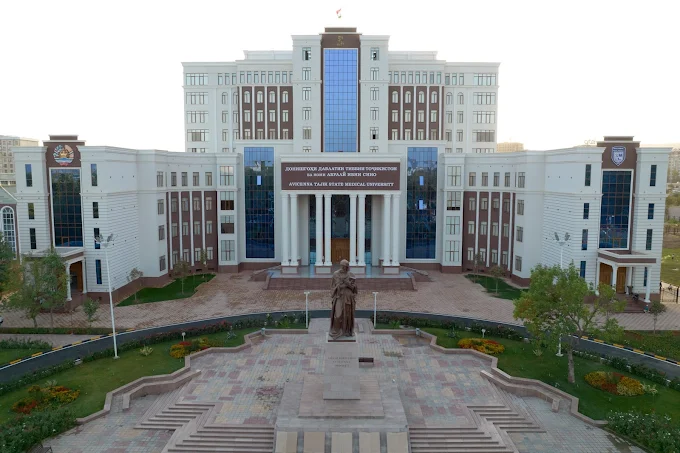
Avicenna Tajik State Medical University, Khujand Branch is a medical school in Khujand, Tajikistan that specializes in training students into the field of medicine through their Faculty of Medicine. Inspired by strong education, training and research, the university aims to create efficient health professionals who are well grounded in their field.
Teaching at the university focuses on a number of theoretical approaches and practical clinical training, covering disciplines including medicine, pharmacy and health care sciences. Students benefit from a world-class education, with state-of-the-art laboratories and teaching facilities, plus clinical practice in partnered hospitals and healthcare establishments.
The university aims to promote scientific research and engage students in academic initiatives and conferences through innovation and international cooperation. The institute has local students from Tajikistan as well as foreign which has produced a multicultural environment.
Avicenna Tajik State Medical University, Khujand Branch Faculty of Medicine aspires to be the principal provider for students who would like to carve their path in the success-oriented healthcare system wherever they choose to spend their medical career.
| Field | Details |
| University Name | Avicenna Tajik State Medical University, Khujand Branch |
| University type | Public |
| Location | Khujand, Tajikistan |
| Medium of Education | Tajik, English, Russian |
| University of validation | WHO/NMC/FMGE |
| Entrance Exam | NEET |
| Ranking | Avicenna Tajik State Medical University is shown at #2 in Tajikistan and #6596 in the world by EduRank 2025, while UniRank lists the main university at #4 in Tajikistan and #9492 in the world; branch-level rankings are not separately published edufever+2 |
| Popular Course | Medicine |
| Founded year | 1939 |
| Course duration | 6 years |
| Eligibility Criteria | 50% in 12th exam with physics, chemistry, and biology |
| Intake | September |
Globally Relevant Medical Education
Khujand Branch of Avicenna Tajik State Medical University has a well-organized structure for students motivated to pursue an international career in Medicine. A balanced learning model, our program is oriented towards fostering academic learning, clinical acumen and professional confidence.
Budget-Friendly Study Option
Students seeking good and cost-effective medical education often prefer the branch. Its tuition fees and living costs are generally lower than most private medical universities, which is attractive for students who want value while being able to avail the same core training as other medical graduates.
Strong Clinical Learning Support
Practical training occurs through hospital-based learning, laboratory work, and supervised clinical exposure. This blend enables them to gain crucial medical skills and also readies them for actual healthcare environments.
International Student Community
It is a multicultural and cooperative environment with students from various nations. This helps students to share experiences, adapt more easily, and create cross-border friendships.
Peaceful Study Environment
But, Khujand is a quiet and student-friendly environment conducive to focusing on studies. The city has a comfortable lifestyle that helps international students to relax and study.
The MBBS / MD program is a 6-year full-time course, usually structured as 5 years of academic study plus 1 year of internship.
Educational Qualification
Applicants must complete 12th grade or
equivalent with Physics, Chemistry, and Biology from a recognized board.
Minimum Marks Requirement
Students generally need at least 50% in PCB,
though some categories may have different requirements depending on admission
rules.
Age Requirement
Applicants should usually be at least 17 years old by the
end of the admission year.
Entrance or Qualification Requirement
NEET qualification is required for
Indian students if they want the degree to be valid in India.
Language Proficiency
Students joining the English-medium program may need
proof of English ability, depending on the admission route.
Required Documents
Applicants usually need academic transcripts, passport
copy, birth certificate, medical fitness documents, and the completed
admission form.
Documents for Admission (Invitation Letter)
Passport copy, educational
certificates, NEET scorecard for Indian students, and consent form for data
processing are generally required.
Documents for the Student Visa (Embassy Level)
Original invitation letter,
valid passport, birth certificate, medical fitness certificate, HIV and
Hepatitis test reports, financial proof, sponsorship affidavit if applicable,
and passport-size photographs are commonly needed.
Student Accommodation Options
Hostel facility is being provided by the university who wants to live close to the college campus. Hostels were developed to provide an inexpensive, effective accommodation option for local and overseas students.
Comfortable Rooms and Living Space
Most rooms come furnished with a bed, desk, chair and wardrobe. Check for more modern room arrangements with better privacy and comfort depending on the hostel building.
Shared Amenities and Daily Support
People living in hostels typically have shared facilities like kitchen, laundry room, study space and Wi-Fi. Such services help the everyday student to be more manageable, convenience wise.
Safe and Organized Environment
The hostel system is designed to ensure a safe and regulated environment. Students enjoy restricted access, proximity to campus and an environment conducive to educational focus.
Affordable Housing for Students
The hostel facility has many advantages, one of which is saving money. Universities often encourage the students by offering accommodation close to the university which helps international students manage their overall budget.
Focused Academic Routine
Lectures, practical classes, laboratory and clinical exposure constitutes the academic component of student life in the university. This structure ensures ideal knowledge retention and also helps the students in staying disciplined.
Cultural Exchange and Friendships
They study together with students from other countries and this is a friendly and multicultural environment. Cultural interaction makes new students feel at home, and enliven campus life.
Student Activities and Participation
Students can engage in group discussions, university events and social gatherings beyond academics. These activities not only improve communication and help you create a greater sense of community.
Sports and Personal Well-Being
Some students may also spend time on sports, recreation or light physical activity to balance the heavy demands of medical study. This keeps the mind fresh and helps with physical health as well.
Daily Life in Khujand
Khujand is relatively quiet and easy to get by in, which is appropriate for students who prefer a serene haven of study. Basic urban facilities like stores can be found around the campus, providing students with sufficient opportunity to access local shops and transport as well as facilities that enable them to maintain academic and social balances.
| Program | Tuition fee per year | Notes |
| MBBS / General Medicine | USD 4,500 | Core annual tuition commonly listed for the university |
| Hostel fee | USD 600 | Annual hostel cost reported in fee listings |
| Medical insurance | USD 200 | Additional annual charge in some fee structures |
| Management / admission charges | USD 1,700 | First-year admission-related charge in some listings |
| Visa extension / miscellaneous fees | USD 250 | Additional charge listed in fee breakdowns |
| Total first-year package | USD 5,100 to USD 6,200 | Depending on inclusions and source |
Get Free MBBS Counselling Now
Limited Seats Available
Tajikistan is one of the leading countries for Indian students to pursue MBBS programs due to high quality medical education at a very affordable price.
© Website is Managed by MBBS Advisor