
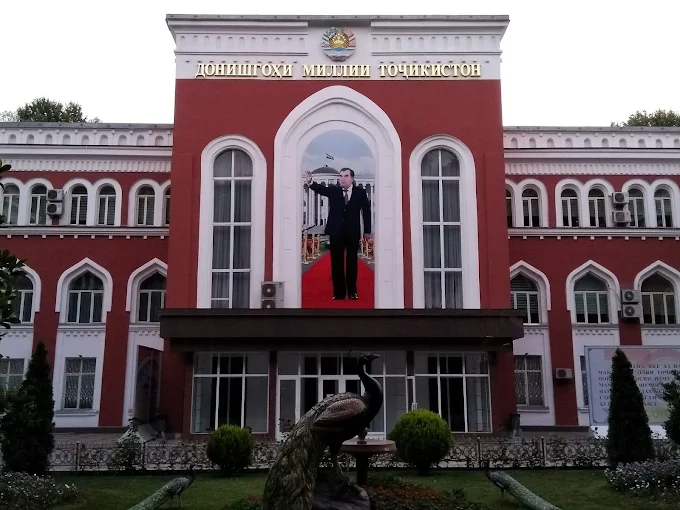
Within this spectrum, the Tajik National University Faculty of Medicine in Dushanbe focuses on their mission to educate future doctors through classroom-based instruction, forensic and experimental laboratory work and hospital-centered practice. The faculty integrates theory with closely supervised clinical exposure, enabling students to progressively develop their skills in diagnostics as well as communication and patient care.
Its various academic departments include in Therapy, Surgery, Obstetrics and Gynecology, Human Anatomy, Microbiology and Virology, Family Medicine, Fundamentals of Medical Training. Supplemented by specialized staff, these departments are based in university buildings and clinical centers across Dushanbe.
MBBS advisors streamline the complex admission process for students targeting international programs in Georgia, Armenia, Russia, Romania, and Ukraine. They provide personalized university matching based on NEET scores, budget (₹20-60 lakhs total), and FMGE pass rate preferences (25-60% across destinations), ensuring optimal program fit.
| Field | Details |
| University Name | Tajik National University Faculty of Medicine |
| University type | Public |
| Location | Dushanbe, Tajikistan |
| Medium of Education | Tajik, English, Russian |
| University of validation | WHO/NMC/FMGE |
| Entrance Exam | NEET |
| Ranking | Exact ranking: UniRank lists Tajik National University at #1 in Tajikistan and #8156 globally; EduRank lists it as #2 in Tajikistan for Medicine and #6409 globally in Medicine uniqueeducation+1 |
| Popular Course | Medicine |
| Founded year | 1947 |
| Course duration | 6 years |
| Eligibility Criteria | 50% in 12th exam with physics, chemistry, and biology |
| Intake | September |
The exact ranking available from the sources is that Tajik National University is ranked #1 in Tajikistan and #8156 globally by UniRank. For medicine specifically, EduRank places it #2 in Tajikistan and #6409 in the world, which is useful when you want the faculty-level medical ranking rather than the university-wide rank. Because different ranking systems measure different things, both figures should be shown together for a fuller picture.
Strong Academic Foundation
The method of the Faculty of Medicine combines lectures and practice in a systematic manner. This ties a solid grounding in medical science to the students and prepares them for elective work subsequently.
Affordable Medical Education
To some people, Tajik National University is not a bad option in terms of annual tuition fee which is lower than most private medical colleges outside Pakistan. As a result — making it an affordable and viable route to gaining an MBBS qualification for many students.
Early Clinical Exposure
As part of the course, students have a chance to observe and practice learning in a hospital-based environment. By being a part of the hospitals on campus, they are exposed to real-time patient care — an element essential to medical education that is usually practiced.
International Student Mix
The University is multicultural with students of many nationalities. This allows students to study in a more international class setting, and develop their communication skills.
Supportive Learning City
Dushanbe is a perfect, cozy and rural place with basic urban amenities. This place is recommended for people studying without being distracted by a very busy metro.
Good Research Culture
The faculty also assists in academics, conferences and research projects. It adds in a more analytical thought process for students and provides them with more depth as an applicant in any post-graduate endeavor.
The MBBS / MD program is a 6-year full-time course, usually structured as 5 years of academic study plus 1 year of internship.
Educational Qualification
Applicants must complete 12th grade or
equivalent with Physics, Chemistry, and Biology from a recognized board.
Minimum Marks Requirement
Students generally need at least 50% in PCB,
though some categories may have different requirements depending on admission
rules.
Age Requirement
Applicants should usually be at least 17 years old by the
end of the admission year.
Entrance or Qualification Requirement
NEET qualification is required for
Indian students if they want the degree to be valid in India.
Language Proficiency
Students joining the English-medium program may need
proof of English ability, depending on the admission route.
Required Documents
Applicants usually need academic transcripts, passport
copy, birth certificate, medical fitness documents, and the completed
admission form.
Documents for Admission (Invitation Letter)
Passport copy, educational
certificates, NEET scorecard for Indian students, and consent form for data
processing are generally required.
Documents for the Student Visa (Embassy Level)
Original invitation letter,
valid passport, birth certificate, medical fitness certificate, HIV and
Hepatitis test reports, financial proof, sponsorship affidavit if applicable,
and passport-size photographs are commonly needed.
On-Campus Living Setup
Hostel accommodation is offered by Tajik National University near the university areas (for example, when medical students are provided to study in those hospitals). It encourages daily commuting of students, saving time in travelling to and fro from campuses when they should be teaching or learning in real classes/ practical sesions.
Room Features and Comfort
They are usually shared and furnished with the minimum you would need for a life to revolve around beds, desks and storage in what might be called hostel rooms. Most students will benefit from enhanced comfort, improved room layouts and a more structured living experience by room type.
Dining and Daily Services
Hostels often have kitchens, laundry facilities, study rooms and Wi-Fi. If you are a student and find it difficult to pay for mess please note that some group of people have also arranged some hostel accommodation in Tajikistan where they provide Indian Mess Guy, which is great if you are finding any place for International students.
Security and Supervision
Normally, hostels also have a security system in place with limited access and all to keep the student safe. This is a reassuring factor for parents and students, especially new arrivals experiencing life abroad for the first time.
Budget-Friendly Accommodation
Staying at a hostel is the cheapest part of studying in college. Since students already live closer, transportation costs go down, translating to better monthly budgeting.
Social Life in Residence
Hostel-student life also contributes a lot to create stress-free friendships with friends from various nations and different backgrounds. An environment of shared living also encourages friendship, peer support and group study — all good things in a demanding medical school curriculum.
Structured Daily Routine
Studying is a vital part of student life, which includes attending lectures and practical classes, spending time at the hospital as well as individual self-study. It teaches discipline and good work habits, but the schedule is packed.
Group Study and Collaboration
(Ironically, at school students commonly study in groups and discuss things and prepare for tests together.) Achievements briefly allow difficult medical concepts to absorb, which eases academic burden.
Campus Diversity and Interaction
Because the university is international, students encounter fellow students from several countries. It helps develop their communication skills and creates a more inclusive and friendly campus.
Events and Student Involvement
Students are allowed to participate on campus in university activities, informal gatherings and academic discussions. It balances the intensity associated with learning medicine with episodes of social interaction and community living.
Wellness and Recreation
Many students keep in shape and also cope with stress — through sports, walking or leisure time. That balance is crucial in a sport that requires daily hours of intense focus and concentration.
Life in Dushanbe
Dushanbe is a comfortable and manageable place for students. You can really get fairly normally through daily life with transportation, food and city services all at this stage while having a rigorous education schedule.
| Year | Tuition Fee (USD) | Hostel Fee (USD) | Total per Year (USD) |
| 1st Year | $3,500 – $4,000 | $500 – $800 | $4,000 – $4,800 |
| 2nd Year | $3,500 – $4,000 | $500 – $800 | $4,000 – $4,800 |
| 3rd Year | $3,500 – $4,000 | $500 – $800 | $4,000 – $4,800 |
| 4th Year | $3,500 – $4,000 | $500 – $800 | $4,000 – $4,800 |
| 5th Year | $3,500 – $4,000 | $500 – $800 | $4,000 – $4,800 |
| 6th Year | $3,500 – $4,000 | $500 – $800 | $4,000 – $4,800 |
Get Free MBBS Counselling Now
Limited Seats Available
Tajikistan is one of the leading countries for Indian students to pursue MBBS programs due to high quality medical education at a very affordable price.
© Website is Managed by MBBS Advisor