
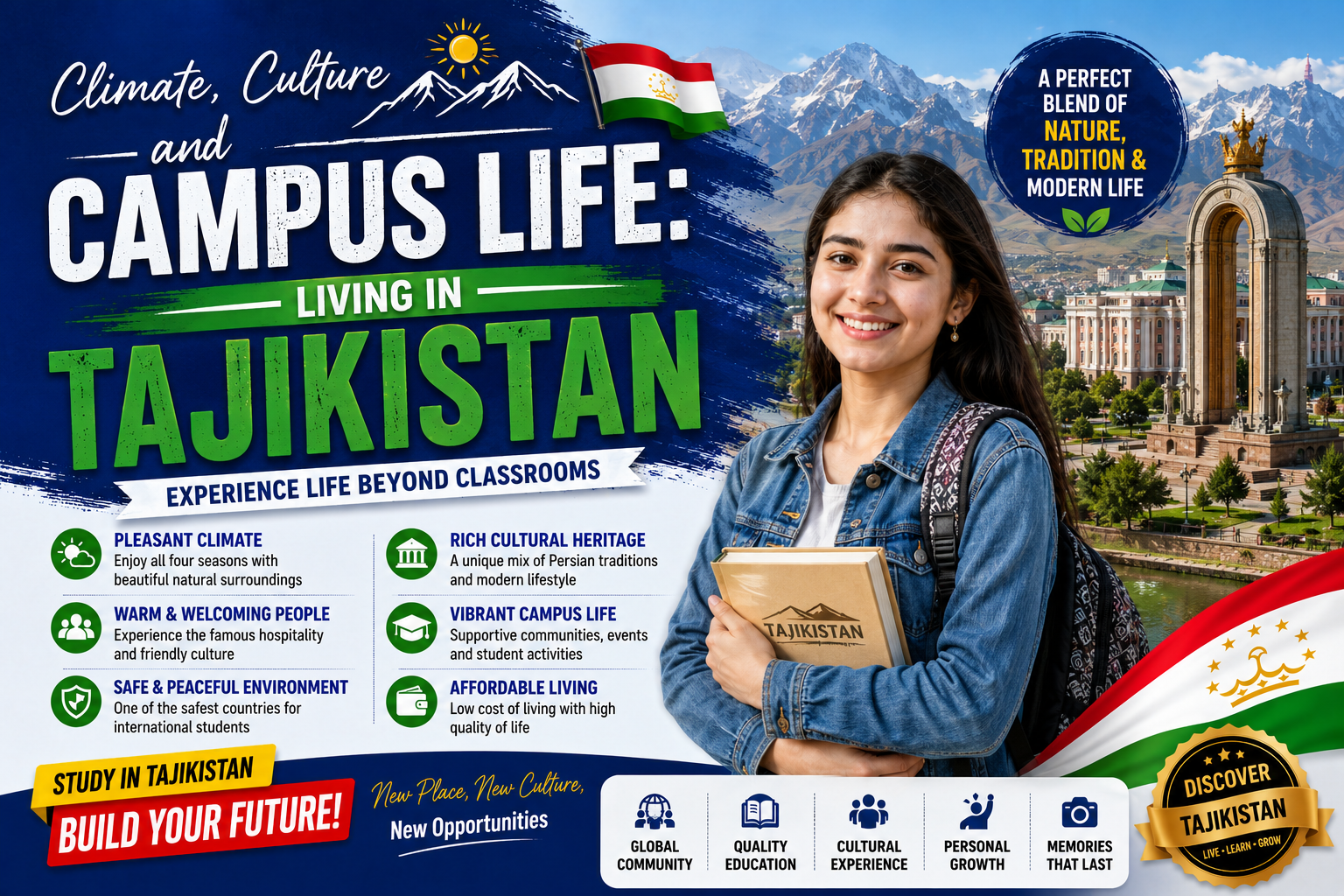
Moving to another country means learning more than just the new country’s language and school system, and for Indian Students, moving to Tajikistan to study MBBS means learning a new food system and a new climate, as well as new customs and traditions. Tajikistan offers affordable medical programs, great medical universities, and a perfect environment for the international aspirant, making it a great place for the international medical student.
However, it is important for the student to be informed as to what life will be like outside of school in Tajikistan. From changing weather to an exciting and friendly culture and environment, Tajikistan has so much to offer the Indian student. Doing the necessary preparations with a good attitude and an open mind will help make the transition to living in Tajikistan easier and FUN.
Understanding Tajikistan's Weather
When the Indian student first moves to Tajikistan, one of the most noticeable changes will be Tajikistan's weather. Tajikistan, located in the Central Asian region, is a country with a continental climate which means there are significant seasonal changes for the student to experience.
Unlike the many Indian states that have mild winters, Tajikistan has cold winters with snowfall, especially in the mountainous regions. The temperature may be difficult to adjust for students from the warm Indian states, but getting the proper winter gear will help the student adjust.
Winter in Tajikistan
In Tajikistan, winter spans December to February. Winter temperatures can be below 0°C, and some regions can have intense winter snow periods. Dushanbe is one of the colder winter cities, but the winter temperatures are manageable. It is also where many international students live.
Indian students can prepare for winter by bringing:
- Warm jackets and sweaters
- Thermal clothing
- Woolen gloves and socks
- Winter shoes
- Moisturizers and lip balm
Most medical universities and hostels have winter heating to keep the indoor spaces warm.
Summer in Tajikistan
Summer in Tajikistan is usually hot and dry. The summer months of June, July, and August can be warm, but unlike most Indian cities, the summer months are less humid.
There are plenty of opportunities to get outside during summer, both to enjoy local sites and to take part in activities hosted by your university. Remember to bring summer essentials like light clothing and sunscreen.
Spring and Autumn: The Best Seasons
Most people in Tajikistan agree that these are the prettiest seasons. The weather is nice and the scenery gets to be the most beautiful in the country with the mountains and rivers turning lush and green.
Winter and Summer can be dramatically different, but knowing how the seasons change can help you prepare for how the beginning of your medical studies will feel.
Culture and Tradition
When it comes to living a life abroad, culture is one of the most important factors. Tajikistan has one of the richer heritages due to its Persian, Central Asian, and Islamic history. All of these combined have given this country a history of warmness and respect toward their guests regardless of their country.
Indian students see many similarities between Indian and Tajik cultures with respect to family values, festivals, and elder respect.
Language and Communication
The State Language of Tajikistan is Tajik, which is a variety of Persian. Russian is widely used for education, administration, and everyday communication.
Most of the medical universities recruiting international students run their programs in English. However, a handful of Tajiks or even Russian would be handy for students to communicate with the locals.
Students coming to Tajikistan likely to learn the following phrases:
- Greet one another.
- Ask for directions.
- Conduct shopping.
- Communicate with patients
The local language also aids during the clinical rotations of the students while they are working in the hospitals.
Food Culture in Tajikistan
Food is a vital aspect of cultural adjustment. Tajik food is primarily made up of rice, meat, bread, dairy, vegetables, and special dishes.
Some of the local delights are:
- Plov
- Sambusa
- Shashlik
- Various traditional bread
Indian students may miss their spices and home meals while there are Indian restaurants and Indian Mess facilities available in Tajikistan.
Those who would prefer to cook will have the chance to make their meals in the hostel, while there are kitchens available for this purpose.
Religious and Social Environment
Most of the population in Tajikistan is Muslim. However, international students mostly have a warm and respectful experience due to the multicultural ambience of the country. Making positive relations with local communities is possible by respecting the customs, dressing decently, and keeping cultural practices in mind.
Campus Life in Tajik Medical Universities
Campus life plays a vital role in the MBBS journey, and Tajikistan's medical universities offer international students modern facilities such as classrooms, laboratories, libraries, and clinical training.
Students from a range of countries (India, Pakistan, Nepal, Bangladesh) join together, providing a multicultural learning experience.
Before selecting a medical university in Tajikistan, Indian students should verify the recognition and listing status of institutions through official medical education resources such as the World Directory of Medical Schools (WDOMS) to ensure proper information about medical schools.
Tajikistan Medical University: The Academic Environment and Teaching System
Tajikistan embraces a well-balanced combination of theoretical and practical components of medical education. Subjects of the MBBS curriculum include:
- Anatomy
- Community Medicine
- Medicine
- Pediatrics
- Pathology
- Pharmacology
- Surgery
During the clinical years, students are afforded the opportunity to practice at the affiliated hospitals and carry out supervised interaction with patients.
There may be a difference in teaching style between Tajikistan and Indian medical colleges, however students will adapt to the teaching style.
Indian students planning to study MBBS abroad should also understand the medical education requirements and guidelines provided by authorities such as the National Medical Commission (NMC) before choosing their preferred medical university.
Networking with International Students
Studying MBBS in Tajikistan offers excellent international networking opportunities.
A key advantage of studying in Tajikistan is the creation of international friendships and support networks. Indian students join together to celebrate Indian festivals and participate in cultural activities as well as assist newcomers to university in the process of adjustment.
These activities foster skill development in the area of communication, and broaden cultural horizons.
Tajikistan Hostels
Most medical universities in Tajikistan offer hostel accommodation to International students. Hostels are often located on or near university campuses.
Some of the standard facilities in hostels include:
- Furnished rooms
- Heating Systems
- Electricity and Water supply
- Internet
- Security services
- Shared Kitchens or Dining facilities
It is common for students to share rooms with their classmates. This encourages students to bond with their classmates and optimally adjust to their new surroundings.
Before selecting housing, students should check with their college on the availability of accommodations, the rules and policies on hostel services.
Daily Expenses and Lifestyle
Tajikistan offers a low cost of living, especially in comparison with Western nations. Students are able to keep costs reasonable for the month if they budget properly.
Common expenses are:
- Food
- Transport
- Cell phone service
- Personal expenses
- Study supplies
The cost of public transport is low, and is generally traversed by buses, taxis, or transport service from the university.
Basic budgeting skills afford students the opportunity to better manage their finances.
Safety and Security for Indian Students
The greatest concern with sending children abroad is safety. With Tajikistan being a generally safe country for international students, most universities offer the following support services for foreign students:
- Hostel security
- International student departments
- Academic support
- Assistance for local procedures
While this security is readily available, students should practice common safety measures, such as:
- No unnecessary travel late at night
- Important documents, etc. kept safe
- University policies are followed
- Stay in contact with the family
Having safety and security measures in place allows students to fully experience and enjoy their study abroad opportunity.
Celebrating Indian Festivals While in Tajikistan
Students studying abroad often miss celebrating holidays and traditional cultural events. Many of the Tajikistan Indian student communities host celebrations for the following:
- Diwali
- Holi
- Independence Day
- Republic Day
University offerings for cultural exchange events are a great opportunity to share and teach about the traditions and celebrations of the various cultures on campus.
Celebrating holidays and cultural events allow students to strengthen the community of Indian students, while also introducing the local Tajikistan students to new cultures.
Challenges Indian Students May Face When Adjusting
Comfortable living in Tajikistan does not come without challenges, especially for students that may face difficulties during the adjustment.
Language Challenge
Overcoming the communication challenge present in the first few months requires the effort of international students to learn keywords and basic phrases in the local language.
Adapting to Weather
Most overseas students spend a longer duration adapting to the extremes of wintry weather. Sufficient warm clothing speeds up the adjustment to the cold.
Difference in Food
Food habits change considerably and adapting to them takes time. Overseas students can continue their familiar eating habits while they try the local food.
Homesickness
Emotional distress from separation of family can be offset by maintaining communication regularly using video calls. Making new friends and being involved in activities can help students feel comfortable.
Quick Adjustment to Life in Tajikistan
The following practical tips can help Indian students make their adjustment to life in Tajikistan smooth and efficient.
Know the Country Pre-Arrival
When students know about the climate, culture, and the university rules of Tajikistan, they eliminate a great deal of confusion on arrival.
Make Friends
Making friends with classmates, seniors, and especially local students, can help students adjust faster.
Join University Events
Taking part in the culturally diverse sports and activities strengthens your sense of belonging, as well as your self-confidence.
Balanced Lifestyle
While the medical field requires a significant time commitment, students should also consider their hobbies and social life, as well as their health.
Respect Local Culture
Respect for local customs and culture enables students to enrich their own cultures and fosters connection.
Conclusion
Adjustment to life in Tajikistan is a vital part of the MBBS journey for Indian students in the culturally diverse but affordable Tajikistan. The welcoming nature of the Tajik people adds value to the experience. While students may experience difficulty with the climate, language and lifestyle, students usually adapt with time and experience.
As an Indian medical student, stepping outside your comfort zone (the Tajik medical campus) and adapting to the external environment (the country of Tajikistan) will be more or less what your peers and colleagues at home are experiencing. Traveling involves learning how to manage new weather conditions and respecting an unfamiliar culture; in this case, Tajikistan’s campus and local traditions as well as being an active campus inhabitant.
Medical universities in Tajikistan are especially great because students take away more than an education in medicine, but the confidence and independence that comes from exposure to the world. On the other hand, international students should be particularly focused on the adjustment period that stems from entrance to a foreign country.
Indian medical aspirants should also check the latest medical admission and eligibility requirements through the official NEET official website before planning their MBBS journey abroad.
For understanding international health standards and global medical education practices, students can refer to information provided by the World Health Organization (WHO).
What is essential for Indian medical aspirants, is the knowledge of the climate and culture. Understanding the rules, recognition criteria, and academic requirements before moving abroad helps students make better decisions for their medical education journey.