
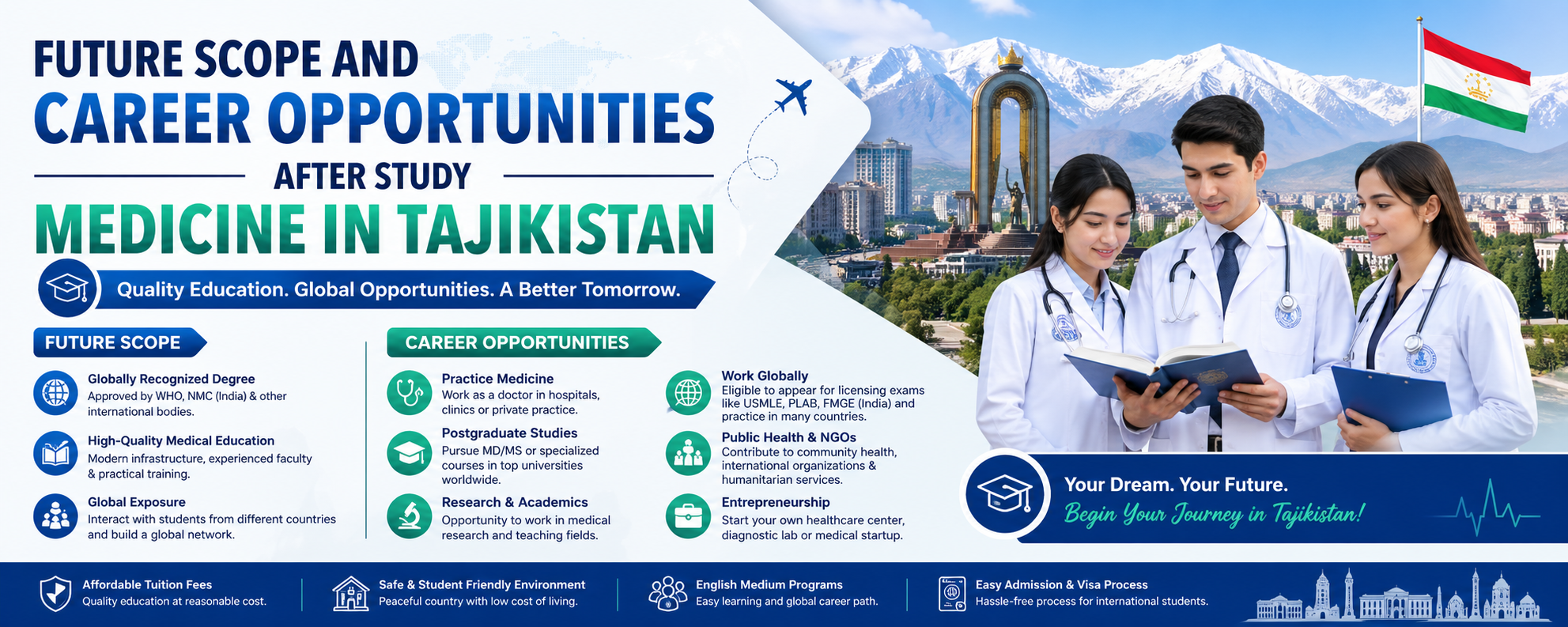
Introduction
A career in medicine is considered one of the most respected and secure professions worldwide. Medicine is a service-oriented field, and even during times of economic uncertainty, thousands of students choose this path every year. However, securing admission to medical colleges is not always easy due to limited seats and intense competition. As a result, many students begin exploring international destinations for medical education, and one of the growing choices among students today is mbbs in tajikistan.
Tajikistan is gaining recognition among international students for providing quality education at an affordable cost. The country continues improving its academic infrastructure while maintaining structured medical programs that support student learning. Students who complete their medical education here have multiple career pathways available depending on their future goals and licensing eligibility.
Understanding the future scope before selecting a destination helps students make informed academic and professional decisions.
Why Future Planning Is Important in Medical Education
Completing medical education is not just about obtaining a degree. It is about building a long-term and sustainable career in healthcare. Students must look beyond graduation and consider several important factors.
Key Factors to Consider for Future Planning
- Licensing requirements
- Postgraduate education options
- Career opportunities in different countries
- Research possibilities
- Professional development
Students who prepare a clear roadmap for their future are better equipped to make confident academic and career decisions.
Why Students Choose Tajikistan for Medical Studies
Students increasingly prefer Tajikistan because it offers a balanced combination of affordability and structured academic learning.
Affordable Education System
One of the biggest advantages of studying medicine in Tajikistan is the affordability of tuition fees. Compared to many expensive private institutions worldwide, Tajikistan offers a cost-effective educational pathway.
Developing Medical Universities
Medical universities in Tajikistan are continuously upgrading infrastructure, laboratories, and clinical training facilities to match modern medical education standards.
Focused Learning Environment
Students benefit from disciplined academic surroundings that promote concentration and structured study habits.
Advantages for Indian Students
International medical education has become more accessible for Indian students in recent years.
Cost-Effective Option
Most families find Tajikistan financially manageable compared to many other international destinations.
Increasing Student Community
With a rising number of Indian students studying abroad, peer support networks are becoming stronger, making academic life more comfortable.
Better Adaptation Experience
Exposure to diverse cultures helps students adjust to international academic settings more efficiently.
Academic Foundation and Training
Medical education in Tajikistan follows a systematic curriculum designed to build both theoretical and practical knowledge.
Core Subjects
Students typically study:
- Anatomy
- Physiology
- Biochemistry
- Pathology
- Pharmacology
- Microbiology
- Internal Medicine
- Surgery
- Pediatrics
- Gynecology
Importance of Clinical Training
Clinical exposure is a critical part of medical education. Students gain practical skills by observing real patient cases, participating in laboratory sessions, and completing hospital-based training programs.
Career Path After Completing MBBS
Students completing medical education in Tajikistan have several professional opportunities depending on eligibility and personal interests.
Licensing Exams in Home Country
Many students return to their home countries to appear for licensing examinations. Indian students, for example, must follow the official rules and eligibility criteria issued by the NMC and qualify through national-level entrance systems such as NEET when required.
Postgraduate Medical Studies
After graduation, students may choose specialized postgraduate programs such as:
- General Medicine
- Surgery
- Pediatrics
- Orthopedics
- Dermatology
- Radiology
Postgraduate education allows students to gain advanced knowledge and specialize in specific medical fields.
International Practice Opportunities
Students who meet eligibility criteria and pass required licensing examinations may explore opportunities to practice medicine in other countries.
Research and Academic Careers
Medical research offers another promising pathway for graduates interested in scientific innovation and healthcare advancement.
Public Health Sector
Graduates can work in public health departments or organizations that focus on disease prevention and community healthcare systems.
Importance of Licensing and Regulations
Every country has its own regulations governing medical practice. Students must remain updated about official rules and professional requirements.
For example, in India, medical education and licensing policies are regulated by the NMC, while international healthcare guidelines are influenced by global organizations such as the WHO that help maintain standardized medical practices.
Skills Developed During Medical Education
Studying medicine abroad contributes to both professional competence and personal growth.
Medical Knowledge
Students gain a strong understanding of human anatomy, diseases, diagnosis methods, and treatment techniques.
Communication Skills
Interaction with international peers strengthens communication abilities and teamwork skills.
Problem-Solving Ability
Medical training enhances analytical thinking and decision-making capabilities.
Emotional Strength
Handling medical responsibilities builds resilience and emotional stability.
Why Pursue a Medical Career in Tajikistan
Tajikistan offers structured medical education designed to build strong academic foundations.
Structured Curriculum
The curriculum follows a logical progression from basic sciences to clinical training, ensuring continuous learning development.
Practical Exposure
Clinical training prepares students for real-world healthcare scenarios.
Affordable Pathway
Lower education costs allow students to complete their studies without excessive financial pressure.
Challenges Students May Face
Studying abroad offers many benefits but also includes certain challenges.
Cultural Adjustment
Students may require time to adapt to new surroundings and cultural practices.
Academic Pressure
Medical education requires consistent effort and discipline.
Language Adaptation
Although most programs are conducted in English, students may need time to adapt to daily communication styles.
Time Management
Balancing academics, practical training, and personal life requires effective planning.
Importance of Planning Ahead
Planning future goals before starting medical education improves long-term success.
Key Planning Areas
- University selection
- Financial budgeting
- Career goals
- Licensing preparation
- Postgraduate planning
Careful preparation helps students build strong academic and professional pathways.
Financial Considerations
Students must evaluate total costs before selecting any international destination.
Major Cost Factors
- Tuition fees
- Hostel accommodation
- Food and daily expenses
- Travel costs
- Study materials
- Emergency funds
Financial planning reduces stress and supports uninterrupted academic progress.
Student Life Experience
Student life in Tajikistan includes both academic development and personal growth.
Hostel Living
Most students live in university hostels or shared accommodations close to campuses.
Social Interaction
Interaction with international students improves cultural awareness and communication skills.
Routine Discipline
A structured daily routine helps students manage study schedules effectively.
Future Scope of Medical Education in Tajikistan
International medical education continues expanding due to rising global healthcare demands. Tajikistan is gradually becoming a preferred destination due to several factors:
- Affordable education
- Improving infrastructure
- Increasing international student intake
- Structured academic programs
Many students begin their research journey by reviewing trusted academic resources related to mbbs in Tajikistan for indian students to understand career pathways, licensing requirements, and university comparisons.
Final Thoughts
Medical education requires patience, commitment, and long-term planning. Tajikistan has emerged as a reliable option for students seeking affordable international medical education combined with structured learning opportunities.
Students who carefully evaluate universities, understand licensing requirements, and prepare financially can build successful careers in healthcare. With proper dedication and planning, those who choose to study medicine abroad can unlock diverse career opportunities and achieve long-term professional success.