
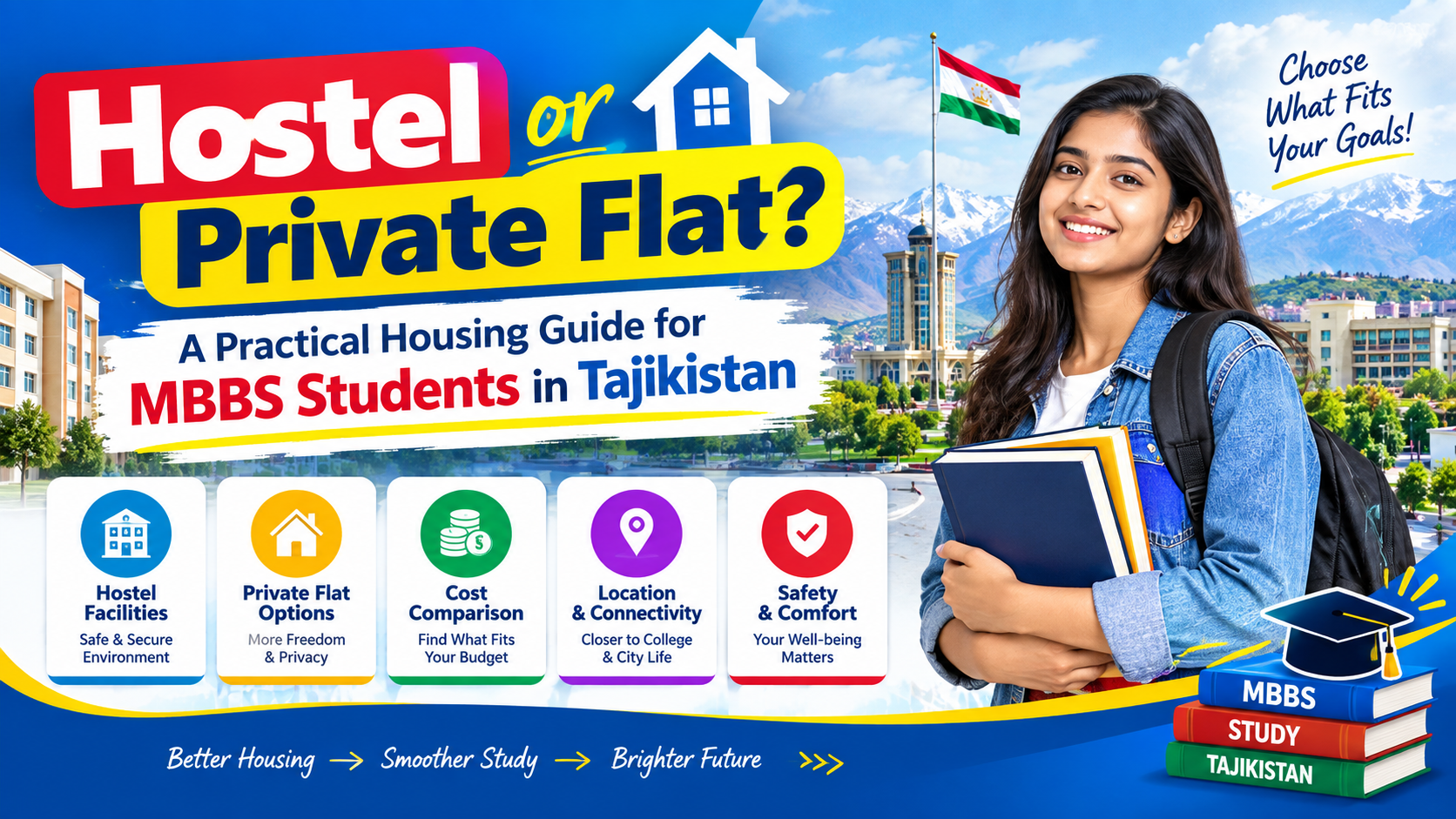
Choosing a medical university is one decision. Choosing where you'll actually live for the next several years is another, and students sometimes underestimate the second one. For Indian students planning MBBS in Tajikistan, accommodation usually comes down to two realistic choices: university hostel or a privately rented flat. Both can work. Both can also become irritating if you choose without understanding the everyday reality. A hostel usually means lower expenses, less paperwork, other students around you, and easier access to the university. A private flat gives you privacy, control over food and daily routine, and usually more personal space. Sounds straightforward. It isn't always. Heating, electricity, deposits, transport, roommate problems, cooking costs, and distance from clinical training sites can completely change the calculation. So instead of simply asking which option is cheaper, students should ask a better question: which housing arrangement fits my budget, study routine, personality, and university location?
University Hostel or Private Flat: The Basic Difference
A university hostel is generally the first accommodation option offered to international medical students. Rooms may be shared by two, three, or sometimes more students, depending on the university and hostel building. Basic furniture, common kitchen facilities, bathrooms, heating, security, and internet availability can vary. Private flats work differently. Students rent an apartment independently or share it with friends, paying rent plus expenses such as electricity, heating, internet, groceries, maintenance, and sometimes an upfront security deposit. Privacy is better. Responsibility is higher too. No hostel administration to call every time something goes wrong.
How Much Does a Hostel Cost in Tajikistan?
Here is where students want a single number, but there really isn't one. Hostel charges depend on the university, room category, city, facilities, and whether accommodation is bundled into the student's initial package. As a broad planning estimate, international students may encounter hostel expenses ranging from roughly USD 500 to USD 1,200 per year, although actual charges can fall outside this range. At an approximate exchange rate, that could mean somewhere around ₹45,000 to ₹1 lakh+ annually.Don't treat those numbers as an official university fee quotation. Exchange rates move, hostel categories change, and universities can revise charges for a new intake. Before paying anything, ask for the current written hostel fee, room occupancy, electricity/heating policy, security deposit, mess availability, and refund conditions. Honestly, the room rent alone doesn't tell you enough.
What Does a Tajikistan Medical University Hostel Usually Provide?
For a first-year student arriving from India, convenience matters more than it initially seems. Imagine landing in a new country and immediately having to find a landlord, understand a rental agreement, arrange Wi-Fi, purchase utensils, locate grocery shops, and figure out transport while medical classes are starting. Not fun. A university hostel can remove much of that initial pressure.Depending on the institution and building, students may get furnished rooms, beds and study tables, shared washrooms, common cooking areas, heating, basic security and access to nearby shops or university facilities. Indian students often prefer cooking arrangements because familiar food isn't guaranteed every day. Ask specifically about induction cooktops, refrigerators and cooking restrictions rather than assuming a kitchen is available.
Private Flat Costs: Rent Is Only the Starting Point
A private apartment looks attractive after you've spent a few months sharing a hostel room. More space. Fewer restrictions. Your own schedule. But the calculation needs to include more than the rent shown by a landlord or property agent.A shared apartment in Dushanbe or another university area could cost roughly USD 150–400+ per month for the whole unit, depending heavily on location, condition, furnishing, number of bedrooms and local rental conditions. Premium or centrally located apartments can cost considerably more. Split between two or three students, the individual expenses can become manageable.Then come the extras: utilities, internet, heating, groceries, transport, security deposit, occasional repairs and household purchases. Even small things add up—bedsheets, utensils, cleaning products, water, cookware. The boring stuff nobody puts in an MBBS brochure.
Approximate Hostel vs Private Flat Budget
|
Expense |
University Hostel |
Shared Private Flat |
|
Accommodation |
Approx. USD 500–1,200/year |
Approx. USD 150–400+/month per flat |
|
Security Deposit |
Often low/varies |
Commonly required |
|
Electricity/Utilities |
May be included or partly included |
Usually separate |
|
Internet |
May be available |
Usually separately arranged |
|
Furniture |
Usually basic furniture provided |
Depends on apartment |
|
Cooking |
Shared kitchen/common facility |
Private/shared kitchen |
|
Transport |
Often lower if campus is nearby |
Depends on location |
|
Privacy |
Limited |
Much better |
These are planning ranges rather than fixed official prices. Students should verify current accommodation charges directly before admission or signing a lease.
Why First-Year MBBS Students Often Do Better in a Hostel
The first year is different. You don't know the city properly, your local-language skills may be close to zero, and you're still adjusting to anatomy classes, university procedures and a completely different daily routine. A hostel gives you something a flat can't automatically provide: a ready-made student network.Need to know where tomorrow's class is? Someone probably knows. Can't understand a local shopkeeper? A senior might help. Need notes before an exam? Your classmates are nearby.For students starting MBBS in Tajikistan, I generally see the hostel as the safer practical choice for at least the initial months unless they already have trusted relatives, senior students or a reliable local support system.
When a Private Flat Starts Making More Sense
Not everyone enjoys hostel life. Some students need quiet to study and become frustrated by roommates, visitors, shared bathrooms or different sleeping schedules. By the second or third year, once students understand local transport, shopping areas, basic communication and university routines, shifting to a flat can become much easier.A flat makes particular sense for two or three responsible students who already know each other. Rent and utility expenses can be divided, while everyone gets more freedom than in a hostel. But choose roommates carefully. Very carefully. A close friend isn't automatically a good person to share rent, cleaning, cooking and electricity bills with for 12 months.
Location Matters More Than a Fancy Apartment
That modern apartment with a big kitchen can quickly lose its charm if you're spending an hour commuting every morning. Medical education isn't limited to lectures. Clinical-year students may need access to hospitals, training facilities and university departments, sometimes early in the day.Check the actual travel time from the apartment to your university and major clinical facilities before signing anything. Don't rely solely on kilometres shown on a map. Ask existing students about public transport, winter travel and taxi expenses. A slightly smaller flat close to campus can be far more practical than a cheaper apartment far outside the student area.
Heating, Winter and Utilities: Don't Ignore This Part
This sounds like a small detail until winter arrives. Then it isn't.Students inspecting private accommodation should ask how the apartment is heated, whether heating expenses are included, how reliable hot water is, and who handles repairs if the heating system stops working. Electricity load matters as well, particularly if several students are using heaters, cooking appliances and electronic devices.Hostels may simplify these arrangements because building-level services are handled centrally, although standards differ. Ask current students about the specific hostel building instead of relying only on promotional photographs.
Food: Hostel Mess or Cooking in a Flat?
Food can quietly decide whether you love or hate your accommodation. Some university hostels may have mess or cafeteria options, while others mainly provide cooking facilities. Availability of Indian-style food varies, so students should check the current situation at their particular university.A flat gives you far greater cooking freedom. You decide the menu, timings and grocery budget. Great for students who can actually cook. If nobody in the apartment cooks and everyone starts ordering food regularly, however, the supposed savings disappear surprisingly fast.A sensible monthly food budget will depend on eating habits and city, but cooking together is normally easier on the pocket than relying heavily on restaurants. Learn five basic meals before leaving India. Seriously. Future-you may be grateful.
Safety and Documentation for Private Rentals
Here—well, this is where students need to be extra careful. A cheap apartment isn't automatically a good deal. Students should avoid informal arrangements where the landlord refuses to provide proper documentation or clearly explain payment terms.Before moving in, confirm the rent, deposit, utility responsibility, duration of tenancy, notice period, inventory of furniture and procedure for returning the security deposit. Keep payment records. Students should also check local registration and residence requirements through their university's international student department because immigration and accommodation documentation rules can change.Your academic eligibility is a separate issue. Indian students planning medical education abroad should continue checking current foreign medical graduate requirements through the National Medical Commission, while NEET-related notices should be verified through the official NEET portal.
Does Hostel or Flat Choice Affect NMC Eligibility?
No, simply choosing a hostel instead of a private apartment doesn't decide whether your foreign medical qualification meets Indian regulatory requirements. Your university, medical programme, course structure, internship/clinical training and applicable NMC rules are far more significant.Students considering MBBS in Tajikistan should independently verify the medical institution and programme before admission. The World Directory of Medical Schools can be used to check medical school listings, while the World Health Organization is useful for broader international health information. One common mistake needs clearing up: a WDOMS listing by itself shouldn't be treated as automatic NMC approval or guaranteed eligibility to practise in India.
Hidden Costs Students Usually Discover Later
The apartment rent may fit your budget perfectly. Then comes the security deposit. Then internet installation. Then cookware. Then transport. And suddenly the “cheap flat” isn't quite as cheap.Students budgeting for MBBS in Tajikistan should keep some extra money aside for bedding, utensils, cleaning supplies, mobile/internet expenses, utility fluctuations, winter clothing, transport and occasional maintenance. Hostel students have fewer household setup costs, but they can still face laundry, mess, cooking, Wi-Fi or additional service expenses depending on what the hostel fee actually covers.My suggestion? Keep at least a modest emergency housing fund instead of calculating your budget down to the last dollar.
Hostel: The Real Pros and Cons
The biggest advantages are obvious: easier initial settlement, relatively predictable expenses, proximity to other students and less responsibility for managing an entire property. For younger students living outside India for the first time, that structure can be genuinely useful.The downside is equally real. Less privacy. Roommate disagreements. Shared kitchens. Possible curfew or visitor rules. Internet quality can vary, and you can't choose your neighbours. Some students adjust within a week; others spend six months dreaming about a private room.
Private Flat: Freedom Comes with Responsibility
Freedom feels good. You can cook at midnight, study without hostel noise, choose your roommates and arrange your room the way you want. For senior students pursuing MBBS in Tajikistan, that independence can make everyday life much more comfortable.But somebody has to pay the bills on time. Somebody needs to speak with the landlord. Somebody has to arrange repairs when the tap starts leaking two days before an exam. If roommates leave unexpectedly, the remaining students may also have to cover a larger share of rent. That's the less glamorous side.
So, Which Option Should You Choose?
For most first-year Indian students, I would start with the university hostel. Stay there for several months, understand the city, meet reliable classmates and learn how much daily life actually costs. After that, reconsider.Students who value privacy, already understand the local area and have trustworthy roommates can look at private apartments. Visit the property personally before paying a major deposit whenever possible. Check heating, water, furniture, commute, neighbourhood, internet and written rental terms. One afternoon of careful checking can prevent months of arguments.
FAQs
Is hostel accommodation compulsory for MBBS students in Tajikistan?
Not necessarily across every university or every year of study. Accommodation policies can differ by institution and sometimes by international student rules. Confirm directly with the university before arranging an outside flat.
How much should an Indian student budget for accommodation?
As a rough planning figure, hostel accommodation may fall around USD 500–1,200 annually, while private flats can vary substantially and may start around USD 150–400+ monthly for an entire shared apartment. These aren't official fixed rates, so current university and local rental prices should be checked.
Can Indian students cook food in Tajikistan hostels?
Many international students use shared cooking facilities, but the setup depends on the particular hostel. Ask whether induction stoves, refrigerators and cooking spaces are provided before arrival.
Is a private flat cheaper than a university hostel?
Sometimes, particularly when three or four students share an affordable apartment. But once utilities, deposits, transport, internet and household expenses are included, the difference can shrink considerably.
Should I take a private flat in my first year?
You can, but a hostel is usually easier for students unfamiliar with the country. After learning the city, university routine and local rental system, moving to a private flat becomes a more informed decision.
Where should I verify my university before admission?
Students should check the institution carefully through relevant official sources, including WDOMS, and understand current NMC requirements applicable to Indian students with foreign medical qualifications. Don't make an admission decision based solely on an agent's statement or one directory listing.
Conclusion
Hostel versus private flat isn't really a question of which one is universally better. It's about timing. A hostel offers structure, company and fewer everyday responsibilities; a flat offers independence, privacy and control, but asks more from you in return.For a student beginning MBBS in Tajikistan, spending the first year—or at least the first few months—in university accommodation is usually the more practical route. Once you know the city and have found dependable roommates, you can decide whether paying for additional privacy is actually worth it. And before finalising university, hostel or overall study expenses, check the latest details through MBBS in Tajikistan and verify important regulatory information from official sources. A little checking before departure saves a lot of trouble after landing.