
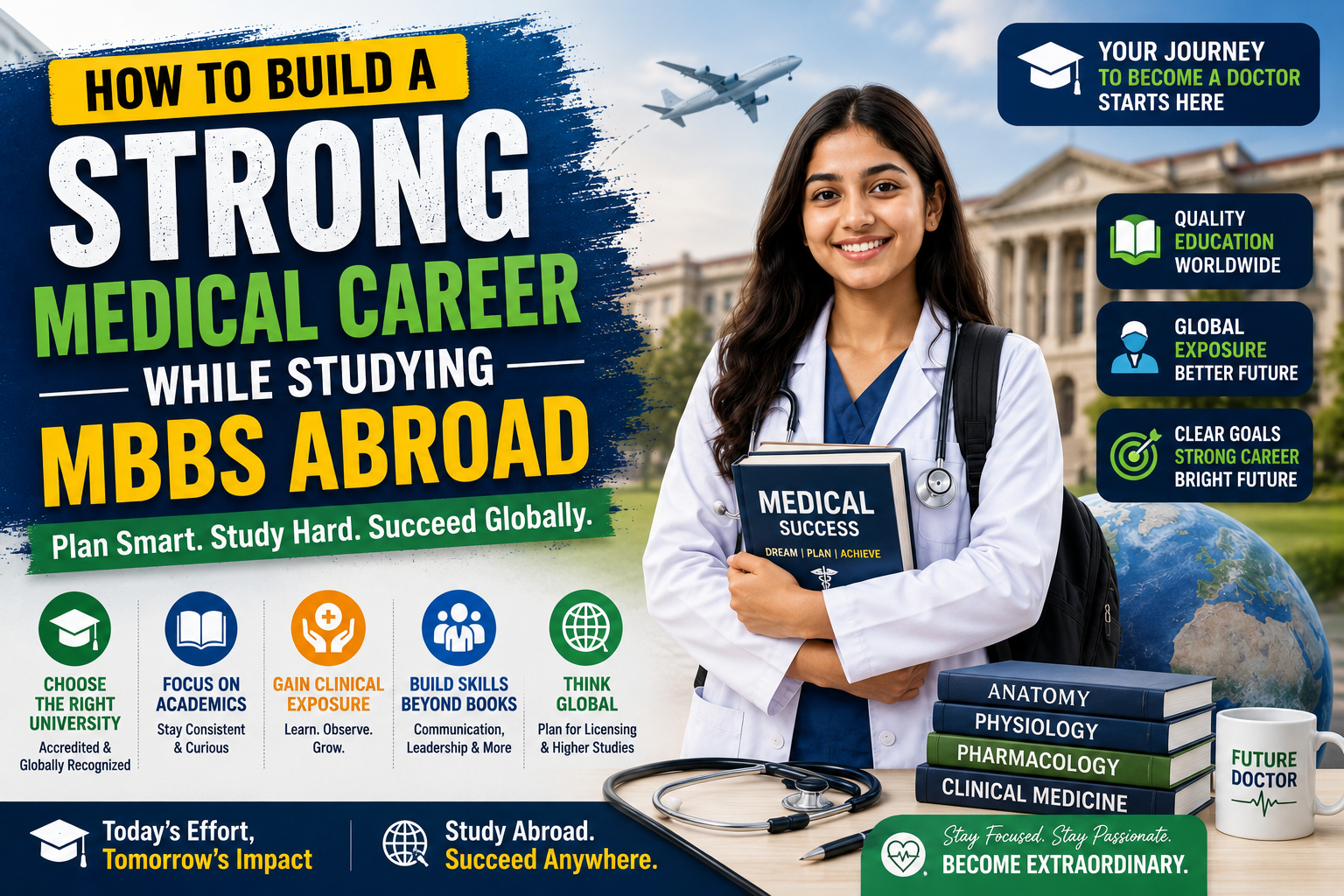
Studying MBBS abroad is not simply about receiving a medical degree from a foreign university. This experience is a chance for students to refine their clinical skills, develop a professional network, and enhance their skills and communication, ultimately leading to a rewarding medical career. Every year, countless Indian students choose to study in countries including Russia, Kazakhstan, Georgia, Uzbekistan, Nepal, and most notably, Tajikistan. These countries offer affordable fees, globally recognized universities, English-speaking instruction, and great clinical practice.
However, having an MBBS degree on its own is not enough in the ever-changing and competitive healthcare market. Graduates who build their professional skills and their work and study-related profiles through involvement in research and through taking licensing exams will be rewarded with great career opportunities.
This article provides guidance on how medical students can enhance their career opportunities while studying MBBS abroad and taking full advantage of every opportunity offered to them during their medical studies.
The Importance of Career Building During Your MBBS
A good portion of students tend to think that the starting line of their career is after graduation. But, in reality, the starting point for a successful medical career is the moment that they step foot on the medical campus as a first-year student.
Medical universities abroad offer students a great education. However, students are also encouraged to pursue extracurricular educational and research activities while they are taking their studies. This will provide them with a competitive advantage while they are seeking employment and will provide them with a better value for their education and great career opportunities.
Building a career during your MBBS course assists you in many ways.
You are able to:
- gain extensive clinical knowledge
- gain skills that are practical to the profession
- become familiar with licensing exams
- become confident in dealing with patients
- have more chances to take on internships
- build a network with medical professionals worldwide
- enhance your chances of getting into a postgraduate program.
The affordable education in Tajikistan facilitates students to refine their skills without the burden of financial stress.
Pick a Medical School with a Global Reputation
The first step in building a successful medical career is picking a medical school that is a globally accepted medical school.
The burden to make sure that the school is accepted by the:
is on the students.
It is important that your medical degree has international recognition and licensing exams are not required to be qualified in other countries.
Most of the reputable medical schools in Tajikistan are higher education schools of international merit and medical schools that are accredited in India.
Give Your Best to Academics
You cannot be a successful doctor without a documented record of achievement in academics.
You should develop a habit to learn consistently and not just prior to exams.
You can achieve this by:
- attending all classes
- reviewing lecture material daily
- creating your own study notes
- leading and participating in study groups
- conducting and actively participating in clinical case studies
- learning medical terms.
The medical knowledge acquired during your MBBS journey is the foundation for entrance exams, your postgraduate studies, and your clinical practice.
Develop Strong Clinical Skills
You cannot be a successful doctor without developing strong clinical skills.
Participation is essential in the following areas:
- Hospital rounds
- OPD observations
- Ward postings
- Emergency departments
- Lab sessions
- Taking patient histories
- Practicing physical examinations
To build confidence during internship and residency programs, students must become comfortable with patient interactions early on.
Medical universities that offer MBBS programs in Tajikistan give students opportunities to gain hands-on experience in teaching-affiliated hospitals.
Develop Communication Skills
Communication is one of the most vital skills in healthcare.
Daily interactions exist between doctors and patients as well as nurses, specialists, administrative personnel, and members of healthcare teams.
Students must practice:
- Speaking and practicing English
- Making and giving presentations
- Counseling patients
- Listening
- Writing and documenting
Communication that is clear and precise builds trust with patients and enhances career opportunities internationally.
Learning to speak the basics of the country's language while studying abroad aids in communication during clinical rotations.
Participate in Medical Research
An enhancing addition to the professional profile of a doctor is research. Participation in the following is essential:
- Medical research and reviews
- Clinical research
- Writing case reports
- Reading journals
- Attending research conferences
One research publication while students are studying for an MBBS may improve the chances of successfully applying for a postgraduate medical education program in another country.
Research sharpens skills in critical thinking and evidence-based medicine.
Attend Medical Conferences and Workshops
Medical knowledge is rapidly evolving. It is the responsibility of the physician to keep abreast of new discoveries and innovations in medicine and therapy.
It is essential for students to attend conferences and training sessions focused on:
- Medicine
- Health
- Clinical practice
- Surgery
These provide learning opportunities for improvements and innovations in medicine and practice. It is additionally a chance to network with skilled health professionals.
Prepare Early for Licensing Examinations
Indian students who plan to return to India after obtaining the MBBS must begin to prepare for the licensing examinations early.
Knowing the latest eligibility requirements from the National Medical Commission (NMC) is important to know before choosing any foreign medical university.
Students should also keep the NEET eligibility criteria for MBBS abroad updated.
Gradual preparation will help reduce the pressure of the final year and better the chances of passing the licensing examinations.
Create Digital Learning Habits
The field of medicine extends far beyond textbooks.
Students should not be afraid to utilize the burgeoning technology and the internet to further their medical education and find resources.
Some valuable resources may be:
- Online anatomy demonstrations
- Video clinical lectures
- Digital flashcards
- Virtual Patient Simulations
The healthcare professions are able to use the internet to interact and learn complex ideas.
Get Leadership Experience
Leadership skills are valuable in a career in healthcare.
Students should find opportunities to serve as:
- Class leaders
- Student coordinators
- Leaders of medical events
- Leaders of health campaigns
- Leaders of research teams
Leadership skills serve as the foundation for healthcare skills of teamwork, communication, and decisiveness.
Establish a Professional Network
Networking is a skill that becomes important after completing the degree in medicine.
Students should develop relationships with:
- Professors
- Medical doctors
- Researchers
- Health care workers
- Students from foreign countries
Professional networks will create opportunities for internships and collaborate on research, as well as post graduate studies and finding a job.
Understand Medical Technology
The future of healthcare is technology.
Doctors of the future should understand:
- Digital Healthcare
- Artificial Intelligence in Healthcare
- Telemedicine
- Medical software
- Digital Diagnoses
Medical technology is a requirement for working in a modern hospital.
Practice Time Management
The study of medicine is a full time job.
Students juggle a lot. They have to align their classes, practical training, self-study, research, physical fitness, and social activities. The creation of a realistic weekly schedule that maximizes productivity and minimizes pointless stress brings an invaluable skill to the student.
Manage Physical and Mental Health
The studying, training, and practicing of a healthy doctor is easier and better.
Students should:
- Exercise regularly
- Eat a healthy diet
- Sleep well
- Manage stress
- Maintain social and recreational activities
These provide balance while rigorous study and practice of a profession.
Maintaining your emotional balance is as important for long-term success as your physical health and fitness.
Engage in Healthcare Community Services
Volunteering in community service for medicine is an excellent source of real life practice in medicine.
Students can volunteer in an untold number of activities.
The value of these services lies in their practice of medicine and their understanding of preventive medicine and public health.
Create An Outstanding Medical Curriculum Vitae
Students should constantly update their curriculum vitae for the metrics that serve them for starting, advancing, or relocating their medical career.
Strong curricula are the clinical and non-clinical activities that result from their training and practice of medicine.
- Attend conferences and training.
- Publish your research.
- Be a volunteer.
- Include all awards and certificates for the above activities.
Strengthen Your Medical Ethics
Ethics in medicine is one of the strongest foundations of the profession.
Always practice medical ethics.
A healthy doctor readily balances the study with the practice of his profession.
A practicing doctor is better.
Always balance practice with self-study medical ethics and your counselor will thank you.
Explore Different Career Paths
Some common choices include:
- Clinical practice
- Postgraduate specialization
- Medical research
- Hospital administration
- Public health
- Medical education
- Healthcare consulting
- Clinical trials
- Medical writing
- Healthcare entrepreneurship
During the MBBS, students have the opportunity to navigate various fields and discover what they would like to pursue for their career.
Be Informed About the Changes in Medicine
Each day medicine and clinical practices improve.
Students have to make a habit of:
- Reading journals
- Following clinical guidelines
- Keeping up with research
- Reading news on healthcare
- Following international treatment protocols
The WHO and other organizations publish updates to healthcare around the globe so students can be aware of new illnesses, treatments, and the changing needs of public health.
Staying informed aids in school and future practice.
The Learning Will Never Stop
Great physicians know that the real learning starts after graduation.
Continuous learning comes from:
- Taking courses
- Earning certifications
- Attending fellowships
- Following the CME
- Attending medical conferences
- Joining online courses
Taking this approach will help physicians thrive.
Conclusion
The effort to have a successful medical career while studying abroad goes beyond the regular passing of medical school. Students who integrate technological advances while focusing on clinical practice, research, communication, and reinforcing their professional network create a strong career base.
For Indian students deciding on their MBBS in Tajikistan, students are offered high quality clinical training, a multicultural health care environment, and education that is NMC approved along with WHO endorsed international healthcare, giving them the assurance of future career possibilities in their home country and beyond.
Ultimately, the best doctors are not just those who earn an MBBS degree. Sadly, there are those who don’t continue to learn or grow their clinical skills, or are too inflexible to embrace advancements in medical practice. As a result, they do not provide meaningful, generic care. The best doctors offer profound care.