
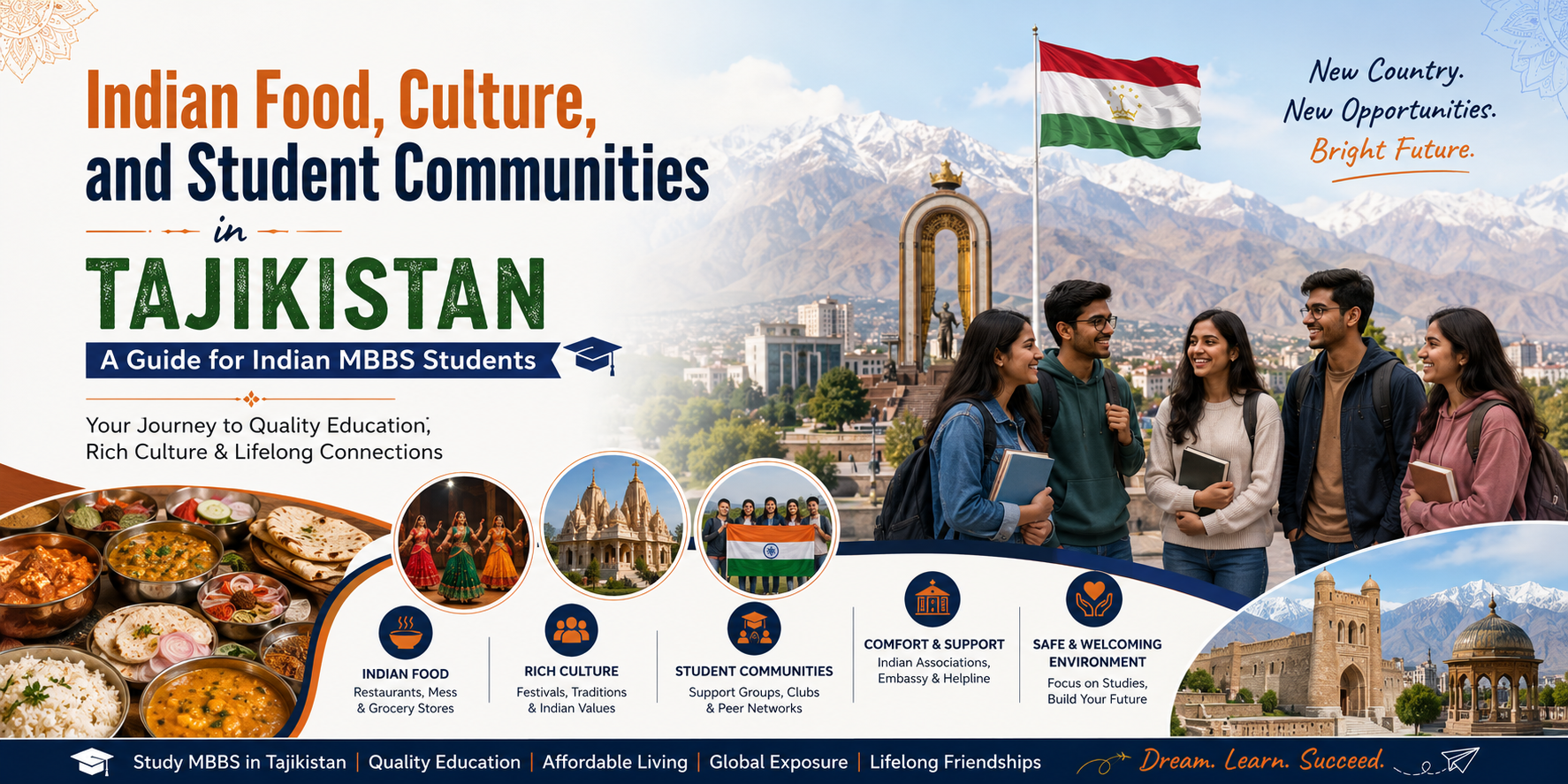
MBBS in Tajikistan is a choice for many students. It is not only an academic decision, but a lifestyle one. Indian students look for Indian-friendly aspects.
Common Questions Indian Students Ask
- Will Indian students be present on campus?
- Will Indian food be available?
- How will I be able to adjust to the local culture?
Indian students and their parents look for university recognition, clinical and internship opportunities, and tuition fees associated with abroad studies. However, the other aspects of life abroad, which are Indian-friendly, are of equal importance.
Tajikistan is more welcoming to Indian students now than before. The numbers are growing. Hostels and their facilities are improving, and students celebrate cultural festivals. Access to Indian food makes the transition even easier. Many students see Tajikistan as an experience of multicultural living with the near comforts of home.
Community Focused
The number of Indian medical students in Tajikistan has steadily been growing in the past decade and has helped build strong, focused student communities and support networks for newcomers.
Unlike the overwhelming experience of being a lone international student, Indian students in Tajikistan are able to belong to a set network and community. Sophomores and above dedicate their time towards orientation of freshers to the local transportation system, university, hostels, and the academic system.
The anxiety of relocating abroad for the first time is nearly non-existent due to the welcoming nature of the community.
Food often evokes the most powerful memories of home for students. Trying to imagine surviving six long years without the comforts of home can be a daunting thought. Luckily, food from India is becoming more and more readily available in the cities where many of our international medical students are located.
Indian Mess Services
There are universities that offer hostels and private accommodations that have launched Indian mess services. They are tailored to Indian students and generally have Indian cooks.
Students typically like to eat:
- Dal and rice
- Chapati and veggies
- Paneer
- Rajma and chole
- South Indian breakfast
- Chicken curry
- Indian snacks
Meals are often cooked using the same spices and flavors Indian households like to use.
Indian Grocery Stores
Food options are growing in India to meet the demand of an increasingly large student population.
You can now find:
- Basmati rice
- Turmeric
- Cumin
- Garam Masala
- Tea
- Instant noodles
- Indian snacks
Some students go grocery shopping together so they can use the available ingredients to cook meals for themselves over the weekend.
Developing Life Skills by Cooking
One of the unexpected positive changes students can look forward to when they study abroad is that cooking and life skills are learned in the process.
Many students that have never cooked a day in their life, learn how to cook during their time abroad. Friends gather every weekend to cook Indian meals together and teach each other different recipes.
Many students learn:
- How to prepare meals
- How to manage budgets
- Plan groceries
- Maintain healthy diets
Knowing these skills goes a long way after students leave school.
Mix of Indian and Tajik Culture
Studying in Tajikistan allows students to learn a different culture without being too far away from their own.
Tajik culture has:
- Importance of Family
- Respect of Elders
- Hospitality
- Good Community Relations
- Importance of Education
Indian students relate to these traits and can adjust to this new culture more easily.
They learn how to appreciate new ways while still focusing on their own.
Ways to Celebrate Indian Festivals in Tajikistan
A big part of why student life in Tajikistan is great is celebrating Indian festivals.
Diwali
Indian student associations decorate common rooms to create a festive atmosphere in hostels and at the university.
Students celebrate with:
- Preparing traditional dishes
- Performing cultural dances
- Putting up lights
- Yoga
- Organizing a large feast
Many students remember these celebrations.
Holi
Holi is celebrated with the permission of the university. Many students from different countries celebrate making it a more international festival.
Other Celebrations
Indian students celebrate:
- Independence Day
- Republic Day
- Gandhi Jayanti
- Regional Festivals
Celebrating these events allows students to stay linked to their culture and allows the international students to learn more about Indian culture.
Student Communities: The Backbone of Support
Strong student communities transform study abroad experiences.
Indian student groups provide help with:
- Arrival from the airport
- Hostel check-in
- University registration
- Local SIM cards
- Opening a bank account
- Orientation to the city
Having this kind of network makes settling into the new environment a lot easier for first year students.
Senior Indian students are normally the first people to whom students reach out whenever abroad challenges are faced.
Building International Friendships
Apart from the communities of Indian students, students are free to mingle with people from all over the world.
Those include students from:
- Nepal
- Bangladesh
- Sri Lanka
- Uzbekistan
- Kazakhstan
- African countries
- Middle Eastern countries
This creates a chance to enhance skills such as:
- Communication
- Cultural sensitivity
- Networking
- Understanding different healthcare systems
- Knowing diverse worldviews
This is especially helpful in the field of medicine, which is becoming increasingly international as the world becomes more integrated.
Hostel Life Encourages Strong Bonds
Medical school and hostel life is extremely tough, but leads to strong, lifelong friendships.
Students spend those years together for:
- Learning
- Eating together
- Interacting through engaging (and oftentimes educational) fun activities
- Sharing and supporting one another through the good and tough times
Friendships formed in MBBS are often those which students carry into their professional lives.
This is the reason why many alumni of the school collaborate both professionally and academically.
Sports and Recreation
Student life goes beyond the classroom and the world of hospitals.
Common activities include:
- Cricket tournaments
- Football matches
- Volleyball competitions
- Cultural events
- Talent shows
- Student clubs
Both international students and Indian students are big fans of cricket. Students organize matches and other students attend. These type of events create a balance between work and play and help with mental health.
Digital Connectivity Keeps Students Close to Home
Modern technology has helped with the international student experience.
With the internet, students can:
- Take calls
- Attend online classes
- Work with online resources
- Stay informed with news
- Attend online celebrations
This connectivity really keeps students from being homesick and helps to strengthen family bonds.
Safety and Comfort for International Students
When it comes to studying abroad, safety is a concern for parents.
To address safety, most universities for international students have:
- Safe hostel facilities
- International student departments
- Emergency support services
- Security systems
- Student welfare programs
These create a safe and comfortable learning environment.
Understanding Local Traditions
The students that have the highest quality of international experiences and personal growth are those that interact with the communities of the places they are visiting.
These students learn about the local:
- Celebrations
- Customs
- Heritage
- Cuisine
- Etiquette
Those with a high cultural intelligence are these students.
A Strong Academic and Social Balance
Many students like studying MBBS in Tajikistan because the study is rigorous while social support is strong.
Medical studies can certainly be difficult. Some examples of what creates a supportive and thriving environment include:
- Familiar food
- Indian festivals
- Student communities
- Hostel friendships
- Cultural activities
International Exposure Beyond the Classroom
There are so many things to learn living abroad that cannot be captured in a classroom setting. Students learn:
- Independence
- Adaptability
- Leadership
- Cultural understanding
- Problem-solving
These qualities are crucial to a successful and well-rounded modern healthcare professional considering the diverse and international practice of healthcare.
Recognition and Future Planning
There are two major steps a student must take to confirm that the medical university of their choice is legitimate.
National Medical Commission (NMC)
World Directory of Medical Schools (WDOMS)
Also, students can track the advances in global healthcare via the:
World Health Organization (WHO)
Verifying that a university meets standards of recognition is an essential milestone toward a student’s future career and practice of medicine.
Conclusion
Studying medicine abroad for Indian students is more than just attending classes and passing exams. It is the opportunity to build a new life in a new environment with new opportunities for personal and professional growth.
Indian students have so many tight-knit communities, as well as frequently celebrated cultural activities and access to Indian food, that the welcoming environment for Indian students has made MBBS in Tajikistan significantly popular for both the quality education and affordable tuition.
For many future medical practitioners, Tajikistan blends the thrill of overseas learning with the relaxation of a safe location far away from home.