
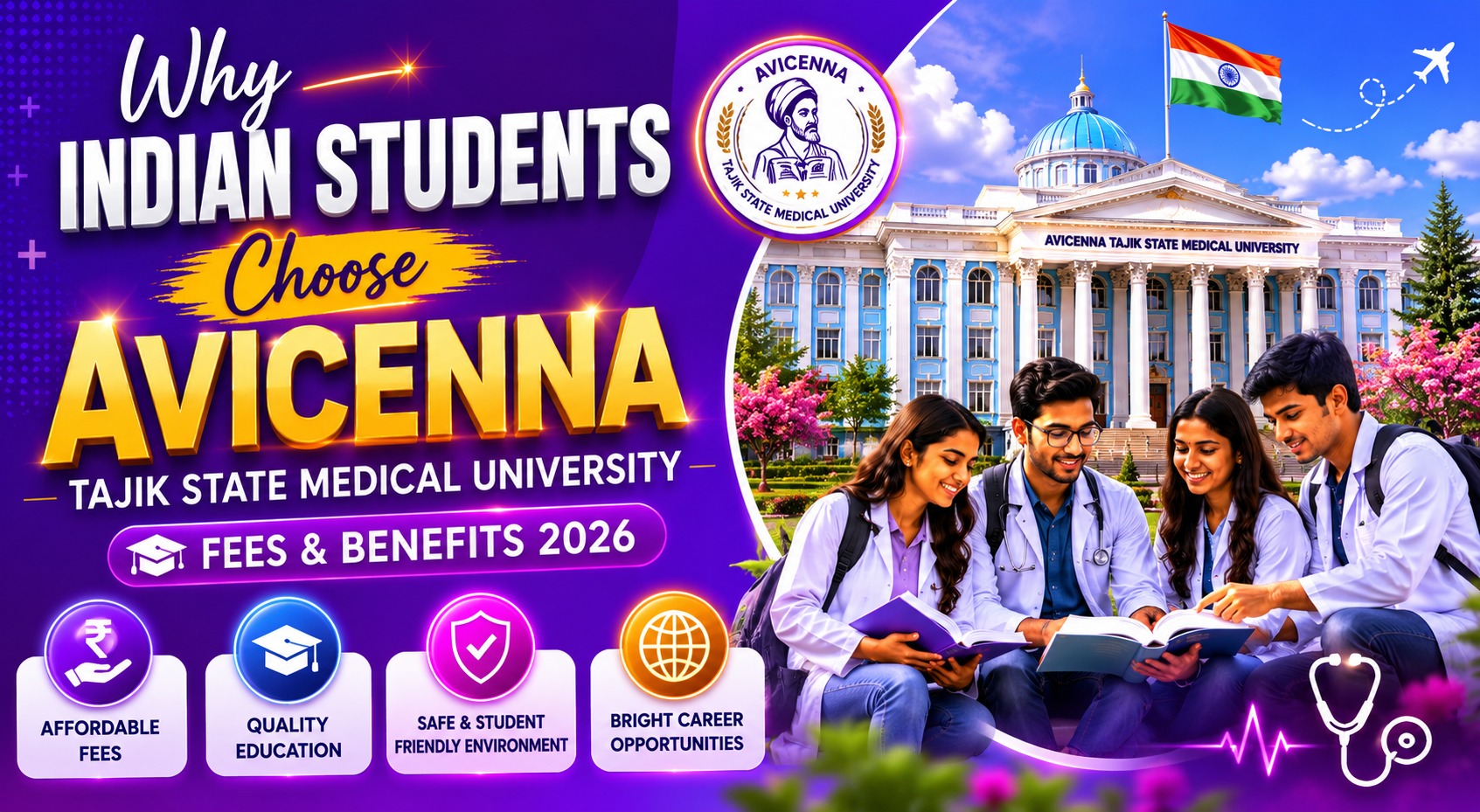
In 2026, the trend of Indian students traveling abroad to pursue a Bachelor of Medicine and Bachelor of Surgery (MBBS) continues to gain momentum. Behind this surge in demand lie long-unresolved core pain points in India’s domestic medical education system.
Every year, millions of test-takers in India sit for the National Eligibility cum Entrance Test (NEET). Although India has continuously expanded its domestic medical education infrastructure over the past decade, the growth rate of available seats in public medical colleges still lags far behind the expansion of the test-taker pool.
Even many high-scoring candidates cannot secure an admission slot at a public medical college; meanwhile, the total cost of completing an MBBS program at an Indian private medical college generally reaches 6 million to 10 million Indian rupees (₹60 lakh–₹1 crore) or even higher, a sum completely unaffordable for ordinary families.
This dual gap in domestic supply has directly spawned a massive demand for overseas study.
Why Tajikistan Has Emerged as a Top MBBS Destination
In India’s 2026 medical student study-abroad market, Tajikistan has emerged as the most popular destination. The country’s Avicenna Tajik State Medical University (abbreviated ATSMU) has stood out from other institutions, becoming the top choice for Indian students submitting study-abroad applications.
Four core driving factors underpin this choice:
- The long-standing shortage of seats in Indian public medical colleges leaves a large number of candidates unable to obtain domestic admission qualifications.
- The exorbitant tuition fees of private medical colleges put those programs out of reach for ordinary families.
- Against the backdrop of medical globalization, an overseas MBBS degree can open up global career pathways for students, including graduate study, scientific research, and clinical employment in multiple countries.
- Countries like Tajikistan have continuously upgraded their medical education standards in recent years, and their medical degrees are recognized by global authoritative bodies, making them a highly cost-effective study-abroad option.
About Avicenna Tajik State Medical University (ATSMU)
Avicenna Tajik State Medical University (ATSMU), located in Dushanbe, the capital of Tajikistan, was founded in 1939. Named after Avicenna, the legendary Persian physician and philosopher, it is a top-reputed medical school in Central Asia.
Since its establishment, it has trained thousands of healthcare workers who practice in countries across the globe. Among its current international student body, Indian students make up one of the largest cohorts.
Unlike many newly established medical schools that are still improving their infrastructure and building their academic systems, ATSMU’s academic framework, refined by decades of educational experience, meets universal international standards while maintaining a practice-focused orientation.
The university is supported by:
- A senior faculty team
- Modern laboratories
- Clinical practice opportunities at its affiliated hospitals
- Regularly updated medical curricula
- International academic cooperation programs
This combination of deep-rooted institutional heritage and modern upgrades is the core reason why the school is widely favored by Indian students.
MBBS Fees and Cost Structure at ATSMU
Addressing the cost concerns that matter most to Indian families, the university’s six-year MBBS program has a clear fee structure:
- Annual tuition ranges from 4,500 to 5,500 USD
- Annual accommodation fees range from 600 to 1,000 USD
- Annual health insurance and miscellaneous fees range from 200 to 350 USD
The total cost of the program amounts to approximately 2.2 million to 3.5 million Indian rupees, which may fluctuate slightly based on exchange rates and living costs.
This total is far lower than the 6 million to 100 million rupee total cost of private medical schools in India.
Furthermore, there are no hidden admission fees of any kind, including:
- Donation fees
- Qualification fees
- Management quota fees
making all costs fully transparent and predictable throughout a student’s enrollment.
Admission Process and Eligibility
The university’s admission process is simple and accessible, with no requirement for additional entrance exams or complicated screening procedures.
The core admission evaluation criteria will be detailed for all readers at a later time.
ATSMU Medical University has launched a full-chain support policy, covering the entire process from application to post-graduation employment, for its international medical students, the majority of whom are from India.
For Indian applicants, the university explicitly mandates a valid NEET score as a basic application qualification.
It has also greatly streamlined the application process by cutting redundant document submission requirements to reduce applicants’ burdens, and uniformly publishes all application rules and material checklists, completely eliminating application confusion caused by information asymmetry.
International Recognition and Accreditation
In terms of institutional qualification recognition, ATSMU has obtained official WHO certification and is formally listed in the WDOMS.
The full set of its clinical medicine curricula fully complies with relevant standards set by India’s NMC, ensuring that all international graduates’ academic degrees hold a compliant foundation for practicing medicine globally.
Career Opportunities After Graduation
In terms of career pathways, the university’s graduates are eligible to take the medical licensing examinations of corresponding countries:
- Those returning to India may sit for the FMGE or NExT
- Those heading to the United States can take the USMLE
- Those going to the United Kingdom can complete the PLAB
Graduates may also apply for medical practice qualifications in:
- Germany
- Canada
- Australia
- New Zealand
- Multiple countries in the Middle East
covering all major global medical employment markets.
English-Medium Education and Student Support
In terms of language support, the university implements English-medium instruction, which removes language barriers for students across four core dimensions:
- Absorbing academic content in class
- Preparing for professional licensing examinations
- Communicating during overseas internships
- Pursuing cross-border career development
This model lays a solid core foundation for students’ long-term professional growth.
Academic Training and Clinical Exposure
The MBBS program in Tajikistan launched by ATSMU’s School of Medicine for international students from across the globe, including India, who aspire to study medicine, has established a full training-cycle support system that covers all aspects of academic work, daily life, and career development.
All services are provided uniformly by ATSMU, accurately matching the core school-selection demands of international medical students, especially Indian international students.
Academic Training Framework
The program builds a solid academic training framework.
Its core academic courses cover 11 core medical disciplines including anatomy and internal medicine, laying a solid professional medical foundation for international students and addressing the core needs of medical students in their introductory study stage.
Early Clinical Training
The program arranges early clinical training that runs through the early phase of the full training period, opening up hands-on practice opportunities in formal clinical settings ahead of schedule, to meet medical students’ urgent need to accumulate clinical experience.
Modern Infrastructure
The supporting modern teaching infrastructure includes professional facilities such as:
- Simulation laboratories
- Anatomy laboratories
providing sufficient hardware support for professional learning.
Student Life and Campus Facilities
In terms of daily life, the program offers separate student dormitories for male and female students and has also developed tailored adaptive services specifically for Indian students.
It has built:
- An Indian student community
- Indian meals that fit students’ regular dietary habits
helping them quickly overcome cultural differences and integrate into campus.
In addition, ATSMU has established a comprehensive campus safety guarantee system that protects international students’ personal safety throughout their studies, eliminating safety concerns for both students and their parents.
FMGE and NExT Preparation Support
To address the core need of Indian students to practice medicine after returning to India, the program also provides exclusive exam preparation support for the FMGE and NExT, laying a key foundational step for their future career development.
Why ATSMU Is a Reliable Choice for Indian Students
For Indian medical students who face barriers applying to domestic medical schools in India, Avicenna Tajik State Medical University (ATSMU) is a reliable choice to fulfill their dream of practicing medicine.
As a top-tier medical institution in Tajikistan, ATSMU has built a complete, structured teaching support system for international students.
It covers all core links of medical student training, including:
- Pre-course preparatory tutoring
- Bilingual full-context classroom instruction
- Clinical practice mentorship
helping students quickly adapt to the pace of overseas study.
The university also hosts a diverse international student community spanning more than 30 countries worldwide, where students can exchange academic insights with peers from different cultural backgrounds, expand industry networks, and accumulate diverse resources to support their future development.
Graduate Career Development Pathways
Graduates of ATSMU have four clear career development paths to choose from:
- Returning to their home country to complete physician certification
- Working at a leading local tertiary hospital in Tajikistan
- Applying for advanced study at top medical schools in Europe and the United States
- Taking up a role with international medical organizations
This full range of options meets all types of career needs.
The Rise of Tajikistan as a Global Medical Education Hub
In recent years, Tajikistan has quickly emerged as a new global hub for medical education.
This rise is driven by three core strengths:
- Fully compliant school operation qualifications
- Low overseas study costs
- High-value, widely recognized academic credentials
ATSMU Support Policies for 2026
In 2026, ATSMU will launch targeted support policies to address the core pain points facing Indian medical students—high domestic admission thresholds and limited enrollment quotas.
These policies include:
- An exclusive fast-track application channel
- Pre-coaching for the Indian physician qualification examination
These core competitive strengths make ATSMU the top choice for Indian medical students pursuing overseas medical education, providing a stable and feasible path to a career in medicine for all Indian medical aspirants who have encountered barriers to domestic school admission.
Conclusion
Avicenna Tajik State Medical University has become one of the popular study-abroad destinations for Indian students pursuing an MBBS degree overseas in 2026, backed by three core strengths:
- Its long-standing academic heritage
- Modern teaching
- Rising international reputation