
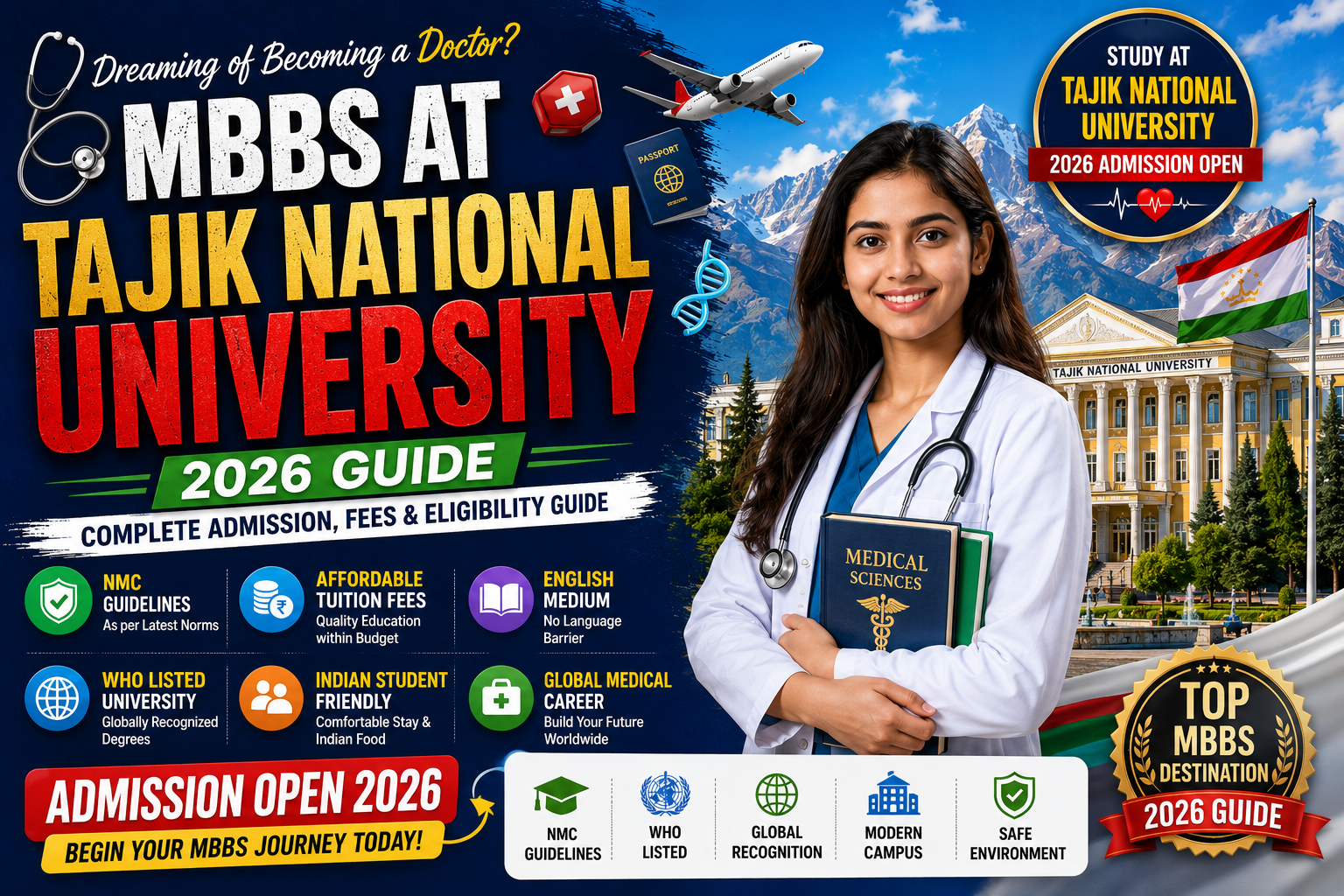
If you are an Indian student planning to pursue a bachelor’s degree in medicine overseas, studying for an MBBS in Tajikistan has gained rapid popularity in recent years. This trend stems from four core advantages: low tuition fees, globally recognized institutional qualifications, full English-medium instruction, and a simple application process. Tajik National University (TNU), in particular, has become a top choice for Indian students thanks to its high-quality, cost-effective medical education. Before you submit your application, you need to clarify five key pieces of information: the full tuition fee structure, application process, admission eligibility, dormitory fees, and other living costs. This guide covers all relevant details about pursuing an MBBS at Tajik National University in 2026.
Why Pursue a Bachelor of Medicine and Bachelor of Surgery (MBBS) at Tajik National University?
Tajik National University is one of the oldest and most prestigious institutions of higher education in Tajikistan. While it guarantees high-quality medical education, its tuition fees are lower than those of many private medical universities in countries such as India. Every year, students from India, Nepal, Bangladesh and multiple African countries submit applications to this university. Its core attractions include modern infrastructure, experienced teaching faculty, clinical practice training, and an internationally recognized degree. Graduates from accredited institutions can take the national licensing exam for medical practitioners in line with their home country’s regulations. For this reason, before enrolling, prospective students must verify the university’s accreditation status through the National Medical Commission (NMC) of India and the World Directory of Medical Schools (WDOMS).
The MBBS program in Tajikistan is growing increasingly popular, with its core appeal lying in its balanced combination of affordable tuition and solid educational quality.
Overview of the MBBS Program at Tajikistan National University
Program Duration
The total length of the program is 6 years, which includes:
- Five years of theoretical academic study
- One year of mandatory clinical internship
The program’s curriculum covers in-person lectures, laboratory teaching, anatomical practice, clinical observation, and hospital-based practical training. The university follows international standards for medical education, helping students build a strong dual foundation in both theory and practical skills.
What is the Tuition Fee for the MBBS Program at Tajikistan National University?
One major reason students choose to study MBBS in Tajikistan is its low tuition costs. While annual fees may see small fluctuations, Indian international students can refer to the general cost estimates provided below for reference.
Tuition Fees
Annual tuition fees typically range from:
- 280,000 to 400,000 Indian Rupees per year
For the full six-year MBBS program, the estimated total tuition fees generally fall between:
- 1.8 million to 2.4 million Indian Rupees
Compared with most private medical colleges in India, where tuition alone can reach 6 million to 9 million Indian Rupees, the program at Tajikistan National University offers extremely high cost-effectiveness. Before submitting an admissions application, students must verify the latest fee structure directly with the university or its authorized admissions partner.
Additional Expenses Students Need to Consider
In addition to tuition fees, students must also plan for a number of other education and living costs.
Accommodation Fees
Most international students pursuing an MBBS degree stay in university dormitories during their studies.
Hostel charges generally range between:
- ₹40,000 to ₹70,000 annually
University hostels usually provide:
- Furnished rooms
- Internet connectivity
- Security
- Laundry facilities
- Shared kitchens
- Reading rooms
Dormitories help students reduce their overall living expenses, while providing a safe residential environment for international students.
Food and Daily Expenses
The cost of living in Tajikistan is far lower than in most European countries. Indian students generally spend between 8,000 and 12,000 Indian rupees per month, a sum that covers meals, daily necessities, local transportation, internet access, personal expenses, mobile phone top-ups, and entertainment. Students who cook their own meals typically have lower expenses than those who often eat out.
Medical Insurance and Other Miscellaneous Fees
In addition to tuition and accommodation fees, students must also set aside a budget for medical insurance, visa renewal, registration fees, laboratory materials, medical textbooks, uniforms, examination fees, and documentation fees. Advanced planning can prevent unexpected financial strain during their study abroad period.
Admission Eligibility Requirements
Students applying for the MBBS program at Tajikistan National University must meet the following basic admission criteria.
Academic Qualification
Applicants must have completed Grade 12 and have taken courses in Physics, Chemistry, Biology, and English. For general-category applicants, their combined scores in the science subjects (Physics, Chemistry, Biology) must reach at least 50%; reserved-category applicants may qualify for score concessions in accordance with current admission regulations. All Indian students applying for overseas MBBS programs, and those who need to complete medical registration in their home country after finishing their degree, must pass the NEET exam. They must also keep up to date with the latest eligibility criteria and guidelines for overseas medical education released by the National Medical Commission (NMC).
Required Application Materials
The admission process is relatively simple. Students generally need:
- Class 10 Marksheet
- Class 12 Marksheet
- Valid Passport
- Passport-size photographs
- NEET Scorecard
- Medical Fitness Certificate
- Birth Certificate (if required)
- Visa documents
- Admission application form
Submitting accurate application materials can speed up the processing of your enrollment and visa applications.
MBBS Enrollment Process at Tajikistan National University
The MBBS enrollment process in Tajikistan is simple, user-friendly, and tailored to students' needs. Most local universities implement a transparent enrollment review mechanism. No additional entrance exams are required, except that Indian students must hold a NEET qualification certificate.
Step 1: Verify Application Eligibility
Before submitting your application, you must confirm that you meet the academic eligibility requirements and have passed the NEET exam. For Indian students who plan to study medicine abroad and return to practice in India, a valid NEET score is a mandatory requirement that must comply with all applicable relevant regulations.
Step 2: Submit Application Materials
You must fill out the university's official application form, and submit the required academic documents, a copy of your passport, personal photos, and other relevant supporting documents. Submitting accurate and complete materials will avoid delays in the enrollment process.
Step 3: Receive the Admission Letter
After the institution verifies the application materials, applicants who meet the requirements will receive an official admission or invitation letter, confirming their provisional admission to the MBBS program.
Step 4: Apply for a Student Visa
After receiving the admission letter, students can start the student visa application process. It is recommended that all required materials be prepared in advance to ensure the visa is approved smoothly.
Step 5: Travel and Enrollment Registration
After obtaining the visa, students may travel to Tajikistan. They can begin their studies after completing university registration and submitting original copies of their materials for verification.
Dormitory Facilities and International Student Life
One major advantage of pursuing an MBBS in Tajikistan is that international students enjoy a comfortable living experience with low costs. Tajikistan National University provides dormitory accommodation for international students that meets their needs.
Dormitory rooms are usually equipped with basic furniture, study desks, beds, heating facilities, and internet access. Security measures, CCTV surveillance, and a dedicated dorm management team create a safe living environment. Many dormitories also provide Indian meals or self-catering facilities for Indian students. Areas around the campus usually have grocery stores, pharmacies, restaurants, banks, and public transportation to meet daily needs. Students can also take part in cultural festivals, sports events, seminars, medical workshops, and exchange programs, which support their personal and professional development.
Is a Bachelor's Degree in Medicine Recognized?
Accreditation is one of the core factors to consider before enrolling in an overseas university. Students must verify that the institution they choose is listed in the World Directory of Medical Schools (WDOMS) and meets the latest guidelines issued by the National Medical Commission (NMC).
Graduates from medical universities accredited by the aforementioned institutions gain better opportunities in professional qualification examinations, postgraduate studies, and international career development, all of which must comply with the relevant regulations of the country where they practice. Meanwhile, students are also advised to keep up with the latest guidelines on global health education standards and medical practices released by the World Health Organization (WHO).
Clinical Training and Practical Experience
A solid clinical foundation is a core essential competence for every medical student. During their MBBS studies, students can access practical opportunities through the university’s directly affiliated teaching hospitals and cooperative medical institutions.
Clinical Training Includes:
- Cadaveric dissection for anatomy
- Laboratory training in physiology and biochemistry
- Hands-on practice in pathology and microbiology
- Clinical ward rotation
- Community medicine training
- Internal medicine practice
- Observation in surgery and emergency medicine
- Fixed-post internships in pediatrics, obstetrics and gynecology, and orthopedics
Such practical training helps students master diagnostic skills, doctor-patient communication abilities, and build clinical confidence before graduation.
Career Development After MBBS Graduation
Graduates who obtain their MBBS degree from Tajikistan National University have a diverse range of career paths. In accordance with the relevant regulations of their intended country of practice, students may choose to pursue further studies, take the national licensing examination, or enter the workforce directly.
Popular Career Options Include:
- Licensed physicians
- Individuals pursuing master’s or doctoral degrees in medicine
- Clinical researchers
- Hospital managers
- Public health professionals
- Medical educators
- Medical consultants who meet the qualification requirements may engage in international medical work
Indian students planning to return to India must comply with the latest qualification requirements and licensing procedures released by the National Medical Commission (NMC) of India.
Why MBBS Programs in Tajikistan Are Growing in Popularity Among Indian Students
Demand for MBBS applications in Tajikistan has risen sharply. The core reason is that the country can provide high-quality medical education at a relatively low cost. Students who fail to secure admission to public medical colleges in India often choose Tajikistan due to its transparent application process and affordable tuition fees.
Key Advantages
- Lower tuition fees than many private medical colleges in India.
- English-taught programs designed for international students.
- Experienced faculty with advanced teaching methods.
- Access to sufficient clinical practice through partner hospitals.
- Comfortable dormitories for international students.
- Lower living costs than most other study-abroad destinations.
- A simple application process with no additional fees.
- The opportunity to study in a multicultural academic environment.
These factors make Tajikistan an ideal study-abroad destination for students who want to receive high-quality education without taking on excessive financial burdens.
Frequently Asked Questions (FAQ)
Q: Is the tuition at Tajikistan National University affordable for Indian students?
A: Yes. Compared with many private medical colleges in India, the total cost of tuition plus living expenses here is far lower, making the medical program extremely cost-effective.
Q: Is passing the NEET exam mandatory to study MBBS in Tajikistan?
A: Yes. In accordance with India's relevant regulations for studying medicine overseas and practicing medicine in India afterward, Indian students must pass the NEET exam.
Q: What is the approximate total cost of studying MBBS at Tajikistan National University?
A: Covering all expenses including tuition, accommodation, meals, insurance, and visa fees, the total investment for the full six-year program is between 2.5 million and 3.2 million Indian rupees. The specific cost may fluctuate based on the university's latest fee standards and the student's personal lifestyle.
Q: How long is the MBBS program?
A: The MBBS program generally lasts six years, which includes academic coursework and clinical internships.
Conclusion
For students seeking cost-effective international medical education, this paper recommends the MBBS program in Tajikistan, which combines high-quality academic resources, practical clinical training, and reasonable costs. Among these programs, the one at Tajikistan National University is the most popular, with experienced faculty, modern infrastructure, full English-language instruction, and a supportive learning environment. Before submitting an application, students must review the latest admissions guide, verify the institution’s qualification through WDOMS, learn about the relevant regulations of India’s National Medical Commission (NMC), follow the international medical education standards set by the World Health Organization (WHO), and make sound plans and informed decisions. Only in this way can students successfully complete their studies and build a successful career path in the healthcare industry.