
Introduction
Medicine is a major career choice that requires strong academic dedication along with careful financial planning. Many students dream of becoming doctors, but the rising cost of medical education often becomes a barrier. In several countries, the limited number of government seats and high fees in private institutions make medical education financially challenging for families. Because of this, students increasingly explore affordable international options, and one such destination gaining attention is mbbs in tajikistan.
Tajikistan is becoming popular among medical aspirants who seek a balanced combination of affordability and quality education. The country offers structured medical programs, improving academic infrastructure, and manageable living costs. This makes it a practical choice for students aiming to pursue medical studies with minimal financial burden.
Understanding the complete cost structure before choosing any study destination is essential for long-term financial stability.
The Importance of Cost in Medical Education
Medical education is not a short-term investment. It spans several years and involves more than just tuition expenses.
Major Cost Components Students Must Consider
- Tuition fees
- Hostel accommodation
- Food and daily living expenses
- Travel costs
- Study materials
- Miscellaneous expenses
Proper financial planning ensures that students complete their education smoothly without interruptions caused by financial challenges.
Why Tajikistan is Considered an Affordable Destination
Students are increasingly choosing Tajikistan due to its structured education system and budget-friendly cost structure.
Affordable Tuition Fees
One of the biggest advantages is comparatively lower tuition fees than those charged by private medical colleges in many countries.
Reasonable Living Expenses
Accommodation, transportation, and daily living expenses remain manageable for most students.
Improving Academic Infrastructure
Medical universities continue improving laboratories, classrooms, and hospital training facilities. Many institutions follow academic standards aligned with global healthcare recommendations supported by organizations such as the WHO.
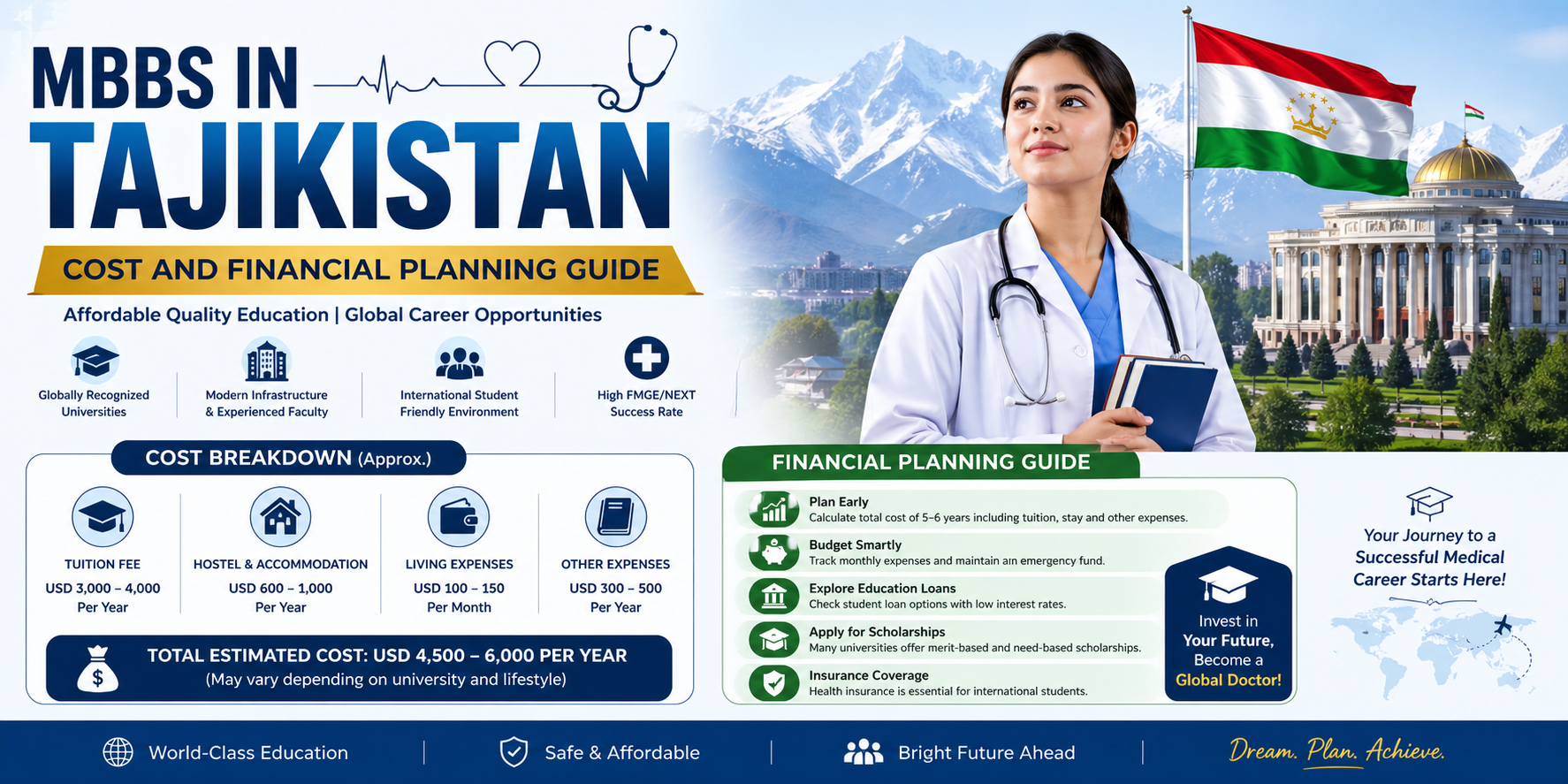
MBBS in Tajikistan Cost Breakdown
Understanding the detailed cost structure helps students prepare financially before beginning their medical education journey.
Tuition Fees
Tuition fees vary depending on the university but remain significantly more affordable compared to many international destinations.
Hostel Fees
Most universities offer hostel facilities or nearby accommodation options that include essential student amenities.
Food Expenses
Students can choose between university mess facilities or self-cooking depending on their lifestyle preferences.
Travel Costs
Travel expenses depend on the student's home country and frequency of travel during academic years.
Miscellaneous Costs
Additional costs may include:
- Books
- Medical insurance
- Personal expenses
- Academic materials
Financial Benefits for Indian Students
Tajikistan has become an economical medical education option for Indian students.
Lower Overall Budget
Compared to many expensive private medical institutions, Tajikistan offers cost-effective education opportunities.
Manageable Monthly Expenses
Students living in hostels and maintaining disciplined spending habits can manage their monthly budgets effectively.
Reduced Financial Pressure
Affordable education allows students to focus on academics rather than worrying about finances.
Why Budget Planning is Important
Students planning to pursue studying mbbs in tajikistan should create a proper financial roadmap before admission.
Avoid Unexpected Expenses
Advance planning helps prevent financial stress caused by sudden expenses.
Long-Term Stability
Since medical education lasts several years, structured budgeting ensures continuity of studies.
Better Academic Focus
Reduced financial stress improves concentration and academic performance.
How to Properly Plan MBBS Budget
A structured financial plan helps students manage expenses effectively.
Step 1: Calculate Total Course Cost
Add tuition fees, hostel expenses, food costs, and travel expenses.
Step 2: Compare Universities
Different universities may have varying fee structures.
Step 3: Plan Monthly Expenses
Prepare a realistic monthly budget covering daily needs.
Step 4: Maintain Emergency Funds
Always reserve extra funds to handle unexpected situations.
Academic Expenses During MBBS
Apart from tuition fees, students incur additional academic-related costs.
Books and Study Materials
Medical textbooks and academic resources are necessary throughout the course.
Practical Training Costs
Some universities may charge fees related to laboratory or clinical training.
Examination and Administrative Fees
These charges vary depending on institutional policies.
Lifestyle Costs for Students
Daily living expenses must be included in financial planning.
Accommodation
Students may choose hostel living or rented housing depending on availability.
Food
Options include university mess facilities or self-cooking arrangements.
Transportation
Local travel costs depend on city size and distance from campus.
Hidden Costs Students Should Consider
Many students underestimate smaller recurring expenses.
Internet and Communication
Mobile recharge and internet services are ongoing costs.
Personal Needs
Clothing, toiletries, and other personal essentials add to overall expenses.
Medical Insurance
Some universities require basic health insurance coverage.
Benefits of Studying MBBS in Tajikistan
Apart from affordability, several advantages support students pursuing medical education in Tajikistan.
International Exposure
Students interact with peers from different countries and cultures.
Structured Education System
Medical education follows a systematic curriculum from foundational sciences to clinical practice.
Growing Facilities
Universities are continuously upgrading infrastructure and learning environments.
Importance of Financial Discipline
Financial management plays a critical role in student life abroad.
Budget Management
Students should track monthly spending carefully.
Avoid Overspending
Controlling unnecessary expenses supports long-term financial stability.
Planning Ahead
Annual budgeting helps maintain consistent financial control.
Common Financial Mistakes Students Make
Avoiding common mistakes helps maintain financial balance.
Not Calculating Total Cost
Considering only tuition fees may create financial problems later.
Ignoring Living Expenses
Food, accommodation, and transport costs significantly impact overall expenses.
No Emergency Budget
Unexpected situations require financial preparedness.
Career Value After MBBS
Completing medical education opens multiple professional opportunities.
Licensing Exams
Students must follow official licensing requirements regulated by authorities such as the NMC and remain updated through examination systems like NEET.
Postgraduate Studies
Specialized postgraduate programs enhance professional qualifications.
Global Opportunities
Depending on eligibility and licensing, students may explore international career options.
Final Thoughts
Financial planning is one of the most important steps in pursuing medical education abroad. Students must clearly understand the complete cost structure before making final decisions.
Tajikistan is emerging as an attractive destination for students seeking affordable medical education combined with structured learning environments. Families researching educational options should carefully evaluate universities, calculate total expenses, and plan budgets before admission.
Students who maintain financial discipline and proper planning while pursuing medical education abroad are more likely to complete their studies smoothly and build strong professional futures.